Weber: Piano Sonatas Nos. 1 & 2
Hamish Milne (piano)
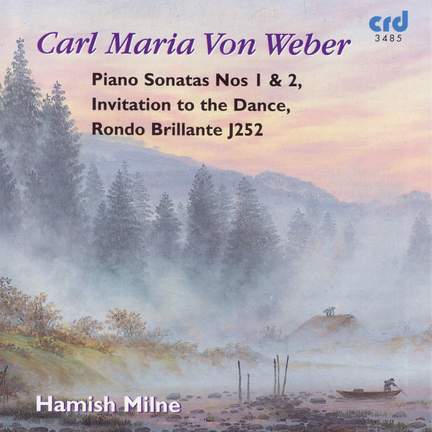
Weber's piano music, once played by most pianists, has since suffered neglect and even the famous Invitation to the Dance is now more often heard in its orchestral form. Since he was a renowned...
Weber: Piano Sonatas Nos. 1 & 2
Hamish Milne (piano)
Purchase product
Weber's piano music, once played by most pianists, has since suffered neglect and even the famous Invitation to the Dance is now more often heard in its orchestral form. Since he was a renowned...
About
Contents and tracklist
Weber:
Sonata No. 2 in A flat major, J199 Op.39
Work length33:26
This work is only available as an album download.
I. Allegro moderato, con spirito ed assai legato
Track length15:00
This track is only available as an album download.
Awards and reviews
 2010
2010
Weber's piano music, once played by most pianists, has since suffered neglect and even the famous Invitation to the Dance is now more often heard in its orchestral form. Since he was a renowned pianist as well as a major composer, the neglect seems odd, particularly when other pianist composers such as Chopin and Liszt are at the centre of the concert repertory; but part of the trouble may lie in the difficulty of the music, reflecting his own huge hands and his tendency to write what the booklet-essay calls 'chords unplayable by others'. Hamish Milne makes out a real case for this music, and his playing of the two sonatas is idiomatic and resourceful, even if one can't banish the feeling that Weber all too readily used the melodic and harmonic formulae of 18thcentury galanterie and simply dressed them up in 19th-century salon virtuosity. From this point of view, a comparison with Chopin's mature sonatas or Liszt's magnificent single essay in the form reveals Weber as a lightweight. A hearing of the first movement in the First Sonata will quickly tell you if this is how you may react, while in its Presto finale you may praise a Mendelssohnian lightness but also note a pomposity foreign to that composer. Leaving aside the musical quality of these sonatas, this is stylish playing which should win them friends. The Rondo brillante and Invitation to the Dance make no claim to be other than scintillating salon music, and are captivating in Milne's shapely and skilful performances. The recording is truthful and satisfying.