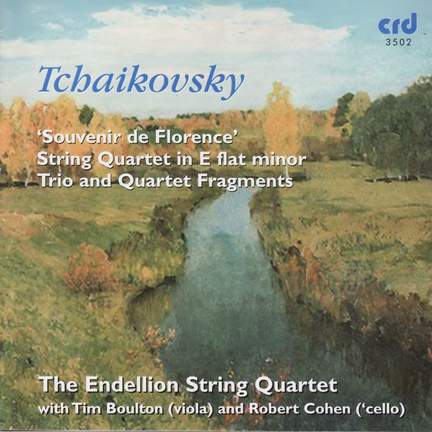
Tchaikovsky: Chamber Music
Robert Cohen (cello) & Tim Boulton (viola)
The Endellion Quartet
There's irresistible joie de vivre in this performance of Souvenir de Florence. The Endellion is clearly fired up by the two extra string partners, and the ensemble conveys the kind of spontaneous...
Tchaikovsky: Chamber Music
Robert Cohen (cello) & Tim Boulton (viola)
The Endellion Quartet
Purchase product
There's irresistible joie de vivre in this performance of Souvenir de Florence. The Endellion is clearly fired up by the two extra string partners, and the ensemble conveys the kind of spontaneous...
About
Contents and tracklist
Work length34:05
This work is only available as an album download.
- Endellion String Quartet, Robert Cohen, Tim Boulton
- Recording Venue: Cambridge University, Faculty of Music, West Road Cambridge
Allegro con spirito
Track length10:21
This track is only available as an album download.
Adagio cantabile e con moto
Track length10:05
This track is only available as an album download.
Work length36:23
This work is only available as an album download.
Andante sostenuto - Allegro moderato - Andante sostenuto
Track length15:45
This track is only available as an album download.
Andante funebre e doloroso
Track length10:19
This track is only available as an album download.
Awards and reviews
 October 2005
There's irresistible joie de vivre in this performance of Souvenir de Florence. The Endellion is clearly fired up by the two extra string partners, and the ensemble conveys the kind of spontaneous enjoyment that only comes from the best chamber music playing. In Quartet No. 3, however, the Borodins are a hard act to follow. All credit to the Endellion for taking a different approach - more intense in the playful Scherzo, and in the funeral slow movement observing the composer's con moto marking at the expense of the heart-on-sleeve approach adopted by the Russians.
 December 2005
The elegiac Third Quartet shows a typically spirited approach, with wide-ranging expression. The great Andante funebre e doloroso has sometimes sounded more doleful at the start (it certainly does in the Borodin Quartet recording) but in this version the music keeps moving, as Tchaikovsky asks, and the consoling second theme is most beautifully characterised.