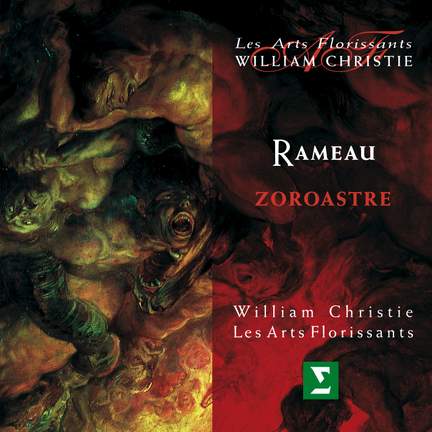
Special offer. Rameau: Zoroastre
Mark Padmore, Nathan Berg, Gaëlle Méchaly, Anna-Maria Panzarella, Matthieu Lécroart, François Bazola, Éric Martin Bonnet, Stéphanie Révidat
Les Arts Florissants, William Christie
Awards:
-
Gramophone Magazine, May 2003, Editor's Choice

To describe Zoroastre as one of Rameau's most uncompromising music-dramas may seem strange when you consider that when it was revived in 1756, seven years after its premiere had met a rather...
Special offer. Rameau: Zoroastre
Mark Padmore, Nathan Berg, Gaëlle Méchaly, Anna-Maria Panzarella, Matthieu Lécroart, François Bazola, Éric Martin Bonnet, Stéphanie Révidat
Les Arts Florissants, William Christie
Purchase product
Awards:
-
Gramophone Magazine, May 2003, Editor's Choice
To describe Zoroastre as one of Rameau's most uncompromising music-dramas may seem strange when you consider that when it was revived in 1756, seven years after its premiere had met a rather...
About
Contents and tracklist
- Matthieu Lécroart (baritone), Nathan Berg (baritone), Anna Maria Panzarella (mezzo-soprano), Stéphanie Révidat (soprano), Gaëlle Méchaly (soprano), Mark Padmore (tenor), Eric Martin-Bonner (bass), Eric Martin-Bonnet (bass), François Bazola (bass)
- Les Arts Florissants
- William Christie
Act 1 "Unissons nos fureurs" [Erinice, Abramane] "Des Bactriens l'ingrate entraînait" [Abramane]
Track length1:33
Act 1 "C'est vous, chère Erinice?" / "Hélas! Tout fuit, tout m'abandonne" / "Dieux, protecteurs de l'innocence" [Amélite]
Track length1:49
Act 3 "Sommeil, fuis de ce séjour" [Zoroastre] "L'aurore vermeille" [Amélite] "Pour la fête la plus belle" [Amélite, Zoroastre] "De notre flamme mutuelle" [Zoroastre]
Track length3:36
Act 3 "Mille rayons brillants" [Zoroastre] "Tout se ranime" [Zoroastre, Amélite] "O lumière vive et pure" [Chorus, Zoroastre]
Track length3:49
Act 3 "Je vous jure" [Zoroastre, Amélite] "Dieux, armez-vous" [Abramane] "Amélite! Elle expire, o Ciel!" [Zoroastre] "Nous périssons" [Chorus]
Track length4:14
Act 4 "C'en est donc..." [Erinice] / "O dieux!" [Erinice, Abramane] / "Qu'une double..." [Abramane]
Track length3:25
Act 4 "Suprême auteur des maux" [Abramane] / "On attaque ta gloire" [Narbanor, Zopire, Chorus]
Track length3:04
Act 4 "Ah! nos fureurs ne sont point vaines" [La Vengeance] "Cours aux armes" [Voix souterraine]
Track length1:17
Act 4 "Courez aux armes" [Erinice, La Vengeance, Abramane, Zopire, Narbanor, Chorus]
Track length1:23
Act 5 "Elle court d'abîme en abîme" [Zoroastre] "Jour funeste! Sort inflexible!" [Céphie, Chorus]
Track length2:16
Act 5 "Que la fière Erinice" [Chorus] "Que tout cède, que tout fléchisse" [Erinice, Abramane]
Track length1:58
Awards and reviews
-
Gramophone MagazineMay 2003Editor's Choice
 2010
2010
To describe Zoroastre as one of Rameau's most uncompromising music-dramas may seem strange when you consider that when it was revived in 1756, seven years after its premiere had met a rather lukewarm reception, it was in a heavily revised version in which the love interest had been stepped up. The story is of the endless struggle between good and evil which dominates the religion Zoroastre himself has founded.
Rameau's prime concern isn't with Zoroastrianism, but the elemental magic scenes and the intensely human emotions of love, jealousy, vengeance and rage thrown up by the story.
Even so, there's a concentrated seriousness of intent about this work which sets it apart from standard tragédie lyrique. The French practice of blurring the distinction between recitatives and arias is intensified, so that choruses and snatches of melody fly past in a breathless, flexible flow of incident. And Rameau's music conjures massive dramatic contrasts, ranging from ineffably tender love scenes for Zoroastre and Amélite in Acts 3 and 5 to the almost oppressive demonic power of the subterranean incantations of Act 4, led by the strongly drawn characters of Abramane and Erinice.
The cast is in the best Les Arts Florissants tradition of dramatic commitment and intelligent treatment of text. Mark Padmore has the perfect high tenor for Zoroastre, able to charm in tender moments yet rage in the confrontational scenes without losing any of its essential sweetness, while Nathan Berg makes a strong and fearsome-sounding Abramane. Even more impressive, however, are the two principal sopranos: Anna Maria Panzarella gives her all as the tormented Erinice, while Gaëlle Méchaly is wonderfully bright and clear as Amélite. There are odd moments of vocal weakness among some of the other roles, but they cause no serious damage. The chorus and orchestra both perform for Christie with great vigour, the former contributing memorably to the underworld scenes, and the latter performing delightfully in the opera's many dances.