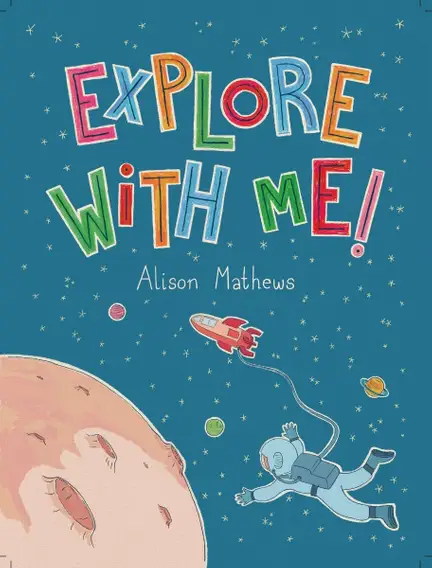
Alison Mathew's latest publication, Explore With Me!, delves into duet playing, improvisation, and rote playing, providing an opportunity to tell musical stories and create descriptive sounds across the keyboard. The book features six exploratory duets for beginning students to play alongside a more advanced pianist, such as a teacher. We spoke with Alison to learn more about the new publication. You can read the full interview below.

I grew up with parents who were passionate about classical music – my home was always full of music! My father was an excellent amateur organist, and both he and my mum encouraged my studies wholeheartedly. They were delighted when I chose to train as a classical pianist and study at the Royal College of Music. Their support continued when my focus widened to academic studies and research with a Master’s degree at Surrey University. I was then awarded a scholarship to fund a PhD in musicology, but after taking time out for my own growing family, I didn’t return, which I do regret a little! My interest in education began early when, as a teenager, I taught a couple of friends and then their younger siblings. My father had also given informal lessons to local children, and I took over! I enjoyed this enormously and decided to take a teaching diploma before going to RCM. I then taught privately throughout my studies and went on to establish a thriving teaching practice.
Your latest title, Explore with Me looks at improvisation and rote playing. Can you elaborate on this – how is this explored in the book, and why is this important for beginner pianists?
The book includes six duets, each introduced with a short story to spark the imagination. Improvisation is integrated carefully into each piece, and young pianists will be describing animals, monsters, a spooky scene, creating a musical journey through space and much more! The student parts include short melodic phrases and rhythms that are ideal to learn by rote and memorise quickly. These establish the musical scene, followed by open-ended sections for improvisation. Learning phrases by rote keeps the focus firmly on creativity and musical storytelling. It also means that the pieces can be easily fitted into lessons – a big plus when teachers are so short on time! The duets also provide a framework for beginners to experiment freely and to feel safe – there’s no right or wrong in improvisation!
Encouraging creativity in all my students – beginners and beyond - has always been an important part of my teaching. It gives students the chance to connect more deeply with music and with the piano, exploring all the wonderful sounds the instrument can make. There is the opportunity to express themselves and, very importantly, see themselves as creators, making the music their own, which has enormous value and gives a real sense of achievement. It’s something that a student will carry forward in their learning.
Can you take us through some of the benefits of duet playing in music lessons, and how the duet pieces in your book explore this?
There are many benefits! Duets help develop a strong sense of pulse and rhythm and, of course, good listening skills. Both players need to listen carefully and respond to each other, considering dynamics and balance. Another aspect is continuity and learning to keep the music going, no matter what happens. There’s a lovely dialogue between each player, with the shared joy of making and creating music together!
In Explore With Me! There’s a mix of teacher and student leading. In the improvised sections, they have the chance to take control and shape the musical direction. However, being able to listen and stay together is equally important, with duets alternating between freedom and stricter tempi. Journey Into Space begins with the student playing cluster chords, which are held for four beats. They must really feel the pulse, counting carefully for the parts to work together. In What’s that Lurking in the Cave? the pupil starts the piece off with a four crotchet note repeated pattern in the bass, a tiptoe through a cave - they establish the pulse and tempo for the duet. To bring the storytelling to life, the student needs to make sure the dynamics are well observed. A good example of this is in Ride Like the Wind where the simple bell sounds that the student plays at the start need to ring out above the busy galloping of the teacher’s part.
Duets also provide a lovely way to introduce improvisation into lessons as the teacher’s part provides support and structure, as well as an instant sound world for a student to respond to.
What other themes and techniques does the book teach?
As the pieces are descriptive, the performance details are vital! The music uses a wide range of dynamics and articulation, giving teachers the perfect opportunity to show how these sounds are achieved through good technique. There’s staccato with pitter-pattering rain, mysterious piano cluster chords, legato with slithering sounds, slurs, accents and glissandi. The student will be creating loud, forceful sounds as well as soft, small sounds.
The book also gives the students a chance to try special effects such as a fist rolls for splashing sounds or creating an echoey effect, by depressing keys with a weight, such as a book, whilst playing. The resulting harmonics will have a magical effect on What’s that Lurking in the Cave!
The book is part of the popular Piano Safari series. How does your book complement this method series and other piano methods?
Explore With Me! sits very well within the series, as so many aspects are integral to both the duet book and the method. Piano Safari takes a holistic approach to learning, integrating technical development with creativity and uses rote learning to enable students to focus on areas such as sound production and freedom of movement around the keyboard right from the earliest stages of learning. The method develops both rote and reading skills through melodic contours and patterns.
As my duet book is focused on developing creativity, the rote aspect is important, and the student parts are designed to be learned this way, with clear and memorable melodies and shapes. Any student learning with Piano Safari will find it easy to use the material in the book. However, the book can be used alongside any method series and isn’t tied to specific chapters in the method. Each piece is a stand-alone duet and an ideal way to introduce improvisation.
The book began as a collection of duets for my students, not all of whom follow Piano Safari, primarily to introduce improvisation in an imaginative and stimulating way. To support this, student sheets are provided at the back of the book, which provide clear steps to support practice at home and are perforated so they can be pulled out and sit on the music stand next to the full scores.
Can you talk a bit about your other publications, such as your Editions Musica Ferrum titles and collaborations with Barbara Arens?
One of my most popular titles with Editions Musica Ferrum is Doodles 1 - another book designed to encourage creativity in young pianists. This takes a different approach, with short, single-line pieces written to develop reading skills progressively, but with a creative twist. Once each short piece is read fluently, the student then develops the music using simple suggestions to create their own version. There are four themes (emotions, pick and mix sweeties, under the sea, and the weather), each with four levels, so plenty of material to explore, and each has a doodle or illustration instead of titles to further engage the imagination! Then there’s Treasure Trove, a collection inspired by rocks, gems and precious stones. It’s a good example of my desire to write music that aims to exploit the sonority of the piano, allowing students, even at the earlier grades, scope to use a wide range of the keyboard and move freely. Many of the pieces appear in exam boards - Buried Rubies is a current ABRSM Grade 4 piece.
My collaborations with Barbara Arens have been hugely enjoyable, resulting in a lively musical exchange over many years! Our styles of writing complement each other; both can be lyrical and expressive, but our approach is different, resulting in collections with greater variety. It started with us independently writing lyrical, sophisticated arrangements of Christmas carols for the more advanced pianist. Once we realised we were both doing this, it felt natural to do it together and Capturing the Spirit of Christmas was born, as was our partnership! We’ve picked themes that inspire us, such as art, which led to Piano Paintings, our second collection. This captures the atmosphere, moods and colours of different artworks in music, such as the beautiful, shimmering Woman in Gold by Gustav Klimt or the dynamism of Picasso’s Dance. One of my favourite books is Capturing the Joy of Winter, which mixes original pieces with those inspired by the rich tradition of folk music from across the world. We have winter landscapes, the warmth of an open fire, even the comfort and joy of good company and a warming mulled wine!
What is next for you?
I’ll be continuing to enjoy my teaching and writing, but most importantly, keep up my fundraising for two charities that provide music education and support to children in areas of conflict and war. This is very important to me! Raising funds through the sale of the book Seeds of Hope is an ongoing mission, made possible by all the wonderful composers who contributed to the project. Given its success, this may well develop further with a second collection in the future. I’m also working on a new repertoire book for beginners, inspired by my love of the natural world on our doorstep. I hope this will be published at some point, but the development of a new book takes time.
Publications by Alison Mathews

Seeds of Hope brings together a group of twenty-two renowned international composers with the aim of raising funds for music charities working with children in Palestine and those caught up in conflict around the world - PalMusicUK and Musicians Without Borders. All profits from the books go to these charities.
Available Format: Sheet Music

This work, by British composer Alison Mathews, was inspired by the names of precious (or not so precious) gemstones. Seventeen works for solo piano can be found inside the score, composed with great attention to detail and the educational value of each and every one of them.
Available Format: Sheet Music

Alison Mathews’ Doodles is comprised of 128 short works, each only a system in length and divided into four themes: moods, sweets, weather and underwater.
Available Format: Sheet Music

A tender, poetic, new collection of fourteen solo piano pieces from British composer Alison Mathews. For grades 5-6, except for the last piece, which is closer to grade 7.
Available Format: Sheet Music