After a chance discovery of hundreds of Florence Price manuscripts in 2009, a treasure trove of masterpieces was uncovered.
Dr. Michael Clark, Assistant Professor of Piano at Baylor University, has curated and edited a collection of twenty of these previously unpublished works for intermediate to early advanced pianists. We recently spoke with Michael about composer Florence Price, the discovery of manuscripts, and his recent publication, Florence Price: Rediscovered Gems for Piano Solo.
Firstly, could you tell me about your background in music, and where your interest in Florence Price originated?
I began studying piano as a young child with a wonderful teacher at a local university. My parents encouraged me and made sure I practiced. As a teenager, I began practicing multiple hours per day and realized I loved music more than anything. I didn’t want to set it aside for other studies, so I majored in piano performance at Ithaca College in Ithaca, New York, then moved to Houston, Texas, to pursue graduate studies in piano performance and pedagogy at the University of Houston. I ultimately earned a Doctor of Musical Arts degree from Rice University, and I now serve as Assistant Professor of Piano at Baylor University in Waco, Texas.
I first encountered the music of Florence Price at a conference hosted by Music Teachers National Association in 2019. I found her music immediately compelling, and I felt a sense of injustice that Price had never been mentioned in my studies at three excellent music schools. At the time, only a few of her pieces were available, so I ordered them and began familiarizing myself with her style. I started performing her music in 2021, and since then, I’ve continued to dive deeper into her work through recording and editing.
Can you tell me about the discovery of Florence Price’s manuscripts in 2009? Is that what enabled this collection to come about?
Price spent her life trying to get her music published, with only modest success. After her death, some manuscripts were archived at the U.S. Library of Congress and at the University of Arkansas, a major institution in her home state—but these represented only a fraction of her output.
In 2009, a couple made a remarkable discovery while renovating a neglected house in a suburb of Chicago, Illinois: hundreds of Price’s manuscripts were boxed up inside! Price had spent most of her adult life in Chicago, and these manuscripts were left behind, nearly lost to history. They are now preserved in the Special Collections at the University of Arkansas, which is where I viewed them to edit the Rediscovered Gems collection. All the pieces in the book were among the documents recovered in 2009.
Can you explain what makes Price’s music unique—her compositional style, influences, and inspirations?

Price’s music is a wonderful blend of musical traditions. She said it best herself in 1943:
“Having been born in the South and having spent most of my childhood there, I believe I can truthfully say that I understand the real Negro music. In some of my work I make use of that idiom undiluted. Again, at other times it merely flavors my themes. And at still other times, thoughts come in the garb of the other side of my mixed racial background. I have tried for practical purposes to cultivate and preserve a facility of expression in both idioms, although I have an unwavering and compelling faith that a national music very beautiful and very American can come from the melting pot just as the nation itself has done.”
Price studied piano and organ at New England Conservatory, so she was deeply rooted in the European classical and Romantic traditions. She composed in popular 19th-century genres, including many waltzes, two “songs without words,” an impromptu, and a barcarolle. She also worked directly with African American vernacular styles, arranging about a dozen spirituals for solo piano and incorporating characteristic juba and cakewalk dance rhythms into instrumental works. Her largest piano piece, the Sonata in E Minor (1932), beautifully fuses these diverse influences into her own distinct voice.
Did you face any particular challenges, or surprises, when editing the collection?
Price’s manuscripts are generally quite neat and legible, but a few pieces in the collection exist only as rough drafts. For those, I worked slowly and carefully to decipher her intentions. Five pieces in this volume derive from untitled manuscripts. She had a flexible relationship with titles, often brainstorming alternatives in the margins of her manuscripts. Above all, she wanted to sell her music to publishers, and descriptive titles were a potential selling point: for example, Price’s manuscript of a two-piano piece offers three titles—Coreopsis, To a Tiger Lily, and Gentle Breeze—and notes in the margin, “Title left to editor’s preference. F.B.P.” In that spirit, I have suggested titles for the untitled works. For Rhapsody in E-flat, Romance in D, and Scherzetto in C, I chose generic titles to match their character. Longing for Home and When Dusk Falls are actual titles that Price brainstormed in the margins of another piece and left unused.
How did you decide which works to include?
Many of Price’s piano works remain unpublished, so I wanted to showcase pieces that the public hadn’t yet had the opportunity to hear. I also wanted most of the book to be accessible to intermediate and early advanced pianists so that teachers could use these pieces in their studios and adult amateurs could enjoy playing them as well. These pieces also represent the varied range of Price’s musical styles.
Do you have a favourite, and if so, why?
That’s a tough question—it changes all the time! Today, I think my favorite is Absence, one of the shorter pieces in the book. It was written in 1950, just three years before she died, and embodies a mature, verging toward austere, late style. It’s simple on the surface but conveys an intense depth of feeling through very few notes.
What can we learn from Price’s music?
Price’s music teaches all the fundamentals students learn through other Romantic composers: producing a cantabile tone, managing complex textures, and nuanced pedaling. In addition, her music offers many performers their first experience with African American vernacular musical styles at the piano.
Can you talk about some of the pieces in the collection for us?
There are two multi-movement sets in the book that I particularly enjoy. In Summer Fields is perfect for intermediate pianists, featuring four charming pieces that spark the imagination: Beside a Quiet Lake, Sunset, Daisies, and Field Mice. I especially love Daisies, an elegant waltz that captures the élan of Price’s larger waltzes without the technical challenges. Forest Scenes includes three untitled movements. In my opinion, the forest is almost certainly a magical one! Price uses whole-tone and modal harmonies throughout in evocative ways that distinguish this set from the rest of the book.
What other music by Price would you recommend listening to or studying?
More and more of Price’s music is being performed and recorded, and it’s all worth exploring. I would encourage everyone to hear her Piano Sonata in E Minor and Piano Concerto in D Minor. The Takács Quartet and Marc-André Hamelin recently released an exemplary recording of her Piano Quintet. Price also composed many beautiful art songs and choral works.
You have also recorded a selection of piano works by Florence Price with Navona Records—can you tell me what that was like, and do you have any tips for pianists when performing her music?
My advice for performing Price’s music is the same as for composers like Brahms, Grieg, or Rachmaninoff: project the character of the piece, produce a beautiful sound, and clarify the texture. To go deeper, pianists could listen to performances of African American spirituals, as well as music by Price’s contemporaries.
For those who buy and enjoy the music in the book, what else would you recommend they explore to expand their knowledge of this style—or that they might also enjoy?
The best way to learn more about Price is through her first (and currently only) biography: The Heart of a Woman: The Life and Music of Florence B. Price by Rae Linda Brown. Other piano works by Price are available through ClarNan Editions and G. Schirmer. I also hope to publish more of her music in the coming years, so keep an eye out for that! In addition to Price, I encourage musicians to explore other African American composers such as Margaret Bonds, Henry T. Burleigh, Nathaniel Dett, and William Grant Still.
Publications and recordings mentioned in this interview

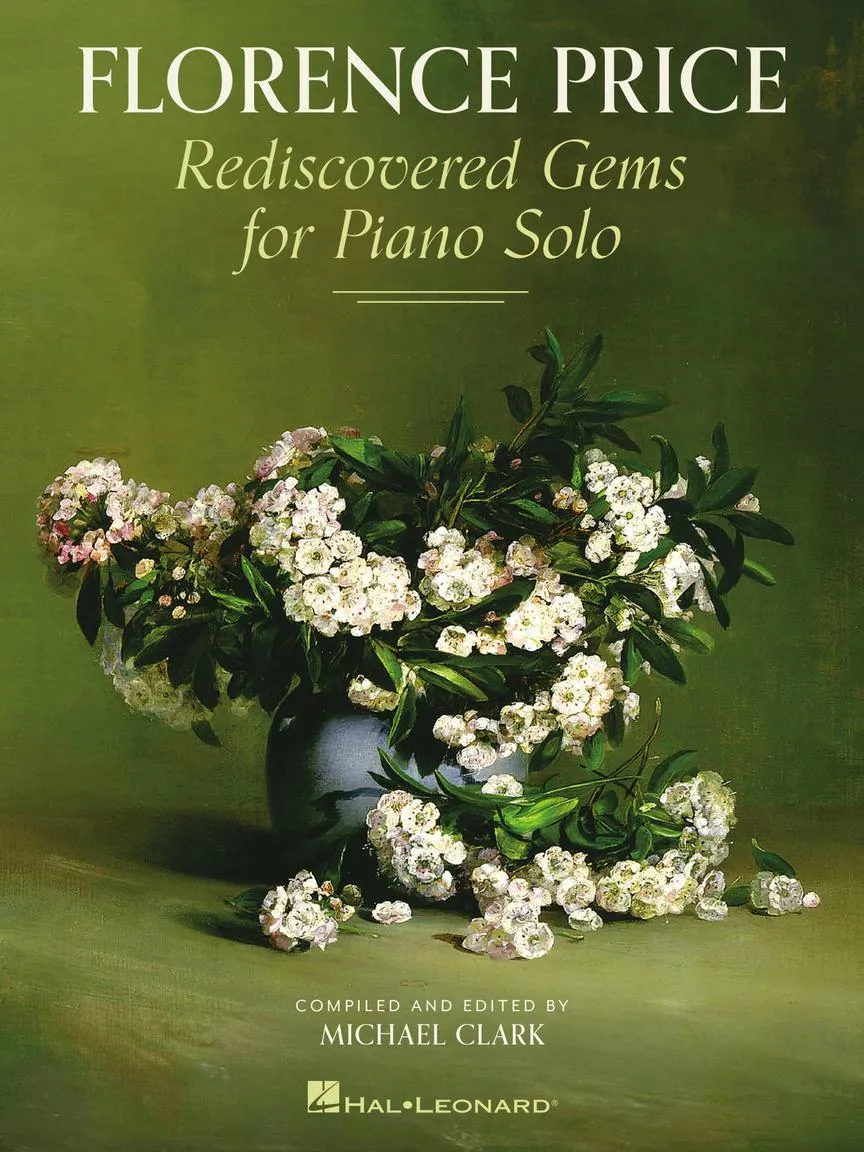
Florence Price: Rediscovered Gems for Piano Solo
Hal Leonard
This stunning collection features twenty previously unpublished piano works by Florence Price, ranging from intermediate to early advanced. While her music is firmly in the European tradition, influences of the American South and Black life are prevalent, as demonstrated by several titles in the collection, which was curated and edited by Dr. Michael Clark. Every piece chosen deserves to be widely known and performed. The book also features Critical Notes and a foreword by Dr. Leah Claiborne.
Available Format: Sheet Music

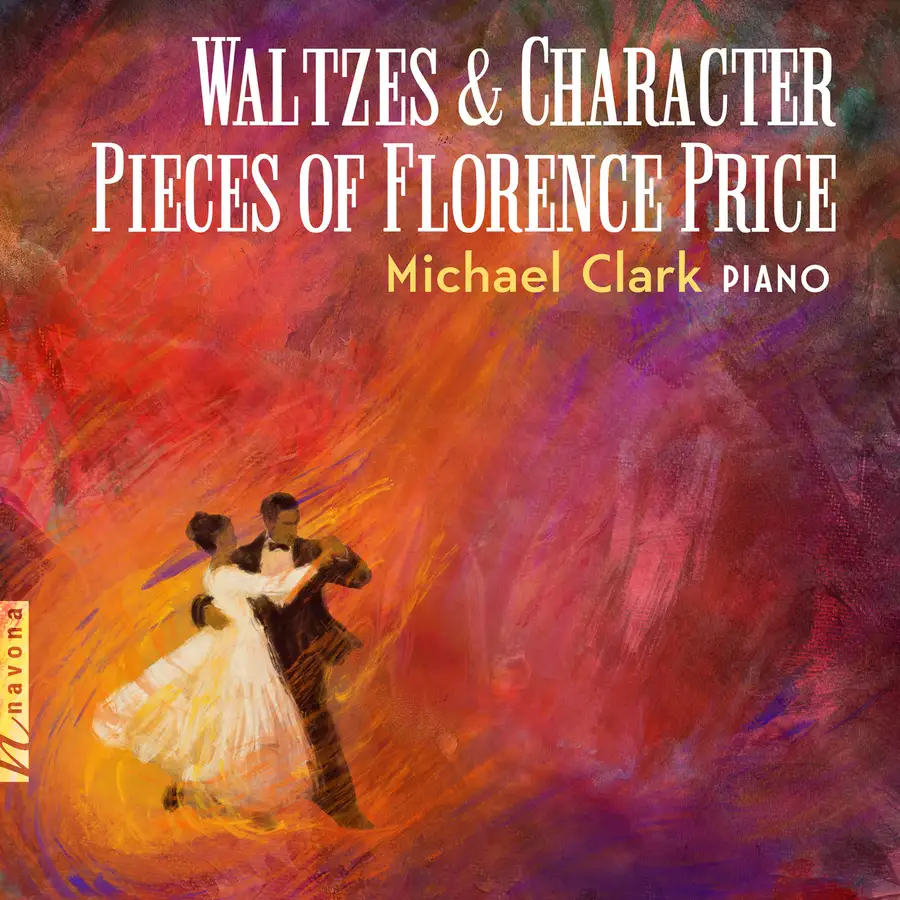
Waltzes and Character Pieces of Florence Price
Michael Clark | Navona Records
Michael's recording of Florence Price works for solo piano.
Available Formats: Hi-Res FLAC/ALAC/WAV, FLAC/ALAC/WAV, MP3

The Heart of a Woman: The Life and Music of Florence B. Price
Rae Linda Brown | University of Illinois Press
The Heart of a Woman offers the first-ever biography of Florence B. Price, a composer whose career spanned both the Harlem and Chicago Renaissances, and the first African American woman to gain national recognition for her works.
Available Format: Book

Dvořák & Price: Piano Quintets
Takács Quartet & Marc-André Hamelin | Hyperion
The performance Florence Price’s Piano Quintet receives on this eagerly awaited new release from the Takács Quartet and Marc-André Hamelin would suggest that it can be only a matter of time before the work—rediscovered only in 2009—is as familiar and much-loved as the one by Dvořák with which it shares the album.
Available Formats: CD, Hi-Res+ FLAC/ALAC/WAV, Hi-Res FLAC/ALAC/WAV, FLAC/ALAC/WAV, MP3