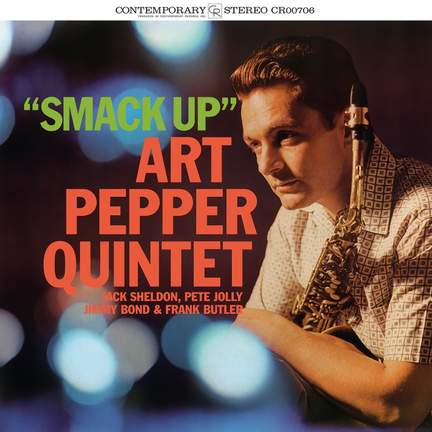
Smack Up
Art Pepper Quintet, Jack Sheldon (trumpet), Pete Jolly (piano), Frank Butler (drums), Jimmy Bond (upright bass), Art Pepper (alto saxophone)

Awards:
-
Jazzwise, Recommended Reissue/Archive, April 2024

Recorded when West Coast jazz’s time in the sun was in decline, Pepper’s playing was moving away from the more fluid construction of his solos that marked him out in the context of West Coast...
Smack Up
Art Pepper Quintet, Jack Sheldon (trumpet), Pete Jolly (piano), Frank Butler (drums), Jimmy Bond (upright bass), Art Pepper (alto saxophone)
Purchase product
Awards:
-
Jazzwise, Recommended Reissue/Archive, April 2024
Recorded when West Coast jazz’s time in the sun was in decline, Pepper’s playing was moving away from the more fluid construction of his solos that marked him out in the context of West Coast...
About
Saxophonist Art Pepper was considered one of the best altos of his time, just behind Charlie Parker. This 1960 recording, whose album’s title presages the addiction that would soon offline the self-taught musician’s career, features compositions written by fellow saxophonists (including Ornette Coleman’s “Tears Inside” and Buddy Collette’s “A Bit of Basie”). Finding Pepper at his finest, most limber form, his own composition “Las Cuevas de Mario” is a particular standout in 5/4 time and would pop up on his set lists in subsequent years.
Acoustic Sounds and Contemporary Records present this new reissue of Art Pepper’s 1960 album “Smack Up”. Recorded by legendary engineer Roy DuNann the album also features Jack Sheldon (trumpet), Pete Jolly (piano), Jimmy Bond (bass), and Frank Butler (drums). This new edition is on 180-gram vinyl pressed at QRP with (AAA) lacquers cut from the original tapes by Bernie Grundman and is presented in a tip-on jacket.
Contents and tracklist
- Art Pepper Quintet, Jack Sheldon (trumpet), Pete Jolly (piano), Frank Butler (drums), Jimmy Bond (upright bass), Art Pepper (alto saxophone)
- Recorded: 1960
- Art Pepper Quintet, Jack Sheldon (trumpet), Pete Jolly (piano), Frank Butler (drums), Jimmy Bond (upright bass), Art Pepper (alto saxophone)
- Recorded: 1960
- Art Pepper Quintet, Jack Sheldon (trumpet), Pete Jolly (piano), Frank Butler (drums), Jimmy Bond (upright bass), Art Pepper (alto saxophone)
- Recorded: 1960
- Art Pepper Quintet, Jack Sheldon (trumpet), Pete Jolly (piano), Frank Butler (drums), Jimmy Bond (upright bass), Art Pepper (alto saxophone)
- Recorded: 1960
- Art Pepper Quintet, Jack Sheldon (trumpet), Pete Jolly (piano), Frank Butler (drums), Jimmy Bond (upright bass), Art Pepper (alto saxophone)
- Recorded: 1960
- Art Pepper Quintet, Jack Sheldon (trumpet), Pete Jolly (piano), Frank Butler (drums), Jimmy Bond (upright bass), Art Pepper (alto saxophone)
- Recorded: 1960
Awards and reviews
-
JazzwiseRecommended Reissue/ArchiveApril 2024
 April 2024
Recorded when West Coast jazz’s time in the sun was in decline, Pepper’s playing was moving away from the more fluid construction of his solos that marked him out in the context of West Coast jazz to a more epigrammatic approach, as if distilling the essence of what he had to say down to its true essence.