Future Stride
Emmet Cohen
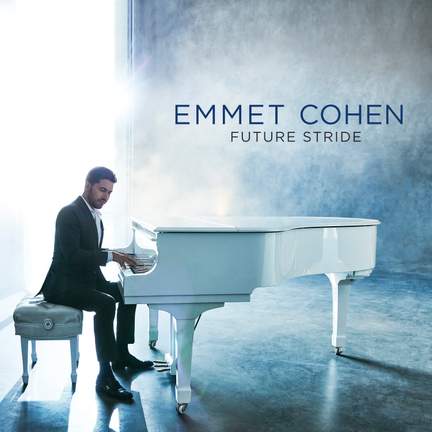
This young pianist-composer revisits the stride piano sound of the roaring 20s on a set of classics and originals with charm to spare.
Future Stride
Emmet Cohen
Purchase product
This young pianist-composer revisits the stride piano sound of the roaring 20s on a set of classics and originals with charm to spare.
About
The sound of stride piano vividly evokes scenes from the past: the roaring nightclubs of 1920s Harlem, the raucous birth pangs of jazz's nascent years, the gymnastic burlesques of risk-taking silent movie madcaps. But in the music of pianist/composer Emmet Cohen, the past is always present, if not venturing with sly turns into an open-eared future as we enter into a new iteration of the roaring 20s.
On 'Future Stride', Cohen revisits one of the music's earliest forms without a trace of quaintness or throwback pastiche by meticulously covering the genre's lexicon spanning the past century and melding its context with "modern" music. He instead finds the immediacy in a stylistic approach that can speak volumes to modern listeners open to recognising its thrilling vitality.
Though he's made a point of connecting with masters from the past throughout his still-young career, Cohen pointedly invites a group of his peers to realize this project, including his longtime rhythm section partners, bassist Russell Hall and drummer Kyle Poole, along with two of modern jazz's most progressive voices, trumpeter Marquis Hill and saxophonist Melissa Aldana.
Contents and tracklist
Awards and reviews
 6th February 2021
This young pianist-composer revisits the stride piano sound of the roaring 20s on a set of classics and originals with charm to spare.
 February 2021
Each [tune] has convincing period-style playing but with distinctly contemporary rhythmic switches, while the title-track goes even further in providing such contrasts. The 47-minute recital has other facets too, including four attractive originals with two horns (of which the ballad ‘Little Angel’ has both parts overdubbed by trumpeter Hill) and these are much closer to the hard-bop mainstream.