New. Mahler: Symphony No. 4 - Bernard Haitink
Juliane Banse (soprano), Symphonie-Orchester des Bayerischen Rundfunks, Bernard Haitink
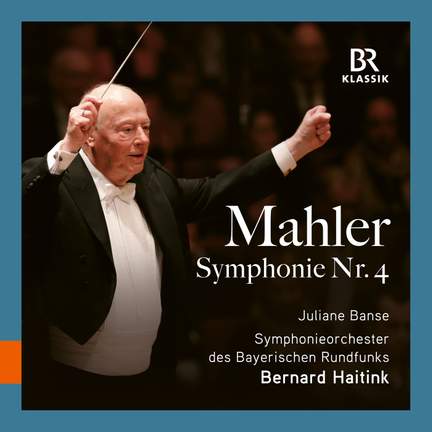
New. Mahler: Symphony No. 4 - Bernard Haitink
Juliane Banse (soprano), Symphonie-Orchester des Bayerischen Rundfunks, Bernard Haitink
Purchase product
About
The Dutch conductor Bernard Haitink and the Bavarian Radio Symphony Orchestra enjoyed a long and intensive artistic collaboration, which came to an abrupt end with Haitink’s death in October 2021. BR-KLASSIK now presents outstanding and previously unreleased live recordings of their concerts from past years.
This recording of Gustav Mahler's Fourth Symphony documents concerts from November 2005 at Munich’s Philharmonie im Gasteig. Haitink first conducted a Munich subscription concert in 1958, and from then on was a regular guest with the Bavarian Radio Symphony Orchestra – either in the Herkulessaal of the Residenz or in the Philharmonie im Gasteig. This congenial collaboration lasted for more than six decades. The orchestra musicians and singers enjoyed working with him just as much as the BR sound engineers. As an interpreter of the symphonic repertoire, and especially that of the German-Austrian Late Romantic period, Haitink was held in high esteem throughout the world. With him, the symphonies of Dmitri Shostakovich were always in the best of hands.
Haitink’s driving principle was to make the sound architecture of a musical composition, with its complex interweaving, transparently audible; extreme sensitivity of sound was combined with a clearly structured interpretation of the score. In his Fourth Symphony, Gustav Mahler brought his preoccupation with the poems from Des Knaben Wunderhorn to a preliminary climax. Texts from the collection, published between 1805 and 1808 by Clemens Brentano and Achim von Arnim, had already been incorporated into the “Wunderhorn Symphonies” Nos. 2 and 3. In Mahler’s Fourth Symphony, composed between 1899 and 1901, the final movement features the Wunderhorn poem “Das himmlische Leben” (The Heavenly Life), which the composer had already set to music in 1892. It depicts a paradise beyond the grave, seen from a child's perspective. Mahler's sceptical view of the world of his time forms a utopian counter-concept to this "heavenly world".