Caldara: Complete Cello Sonatas
Francesco Galligioni (cello), Alberto Galligioni (cello), Paolo Zuccheri (violin), Lorenzo Feder (organ), Roberto Loreggian (organ, harpsichord), L’arte Dell’arco
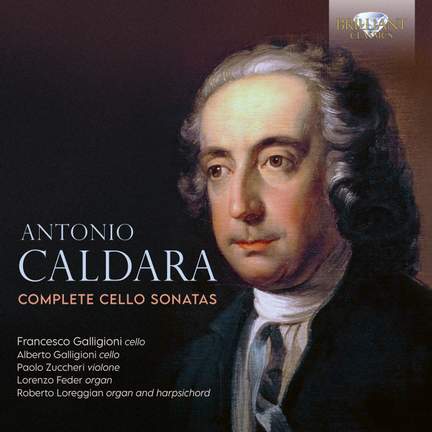
Caldara: Complete Cello Sonatas
Francesco Galligioni (cello), Alberto Galligioni (cello), Paolo Zuccheri (violin), Lorenzo Feder (organ), Roberto Loreggian (organ, harpsichord), L’arte Dell’arco
Purchase product
About
A new and complete survey of the attractive body of cello sonatas which, in his day, helped to make Antonio Caldara a Viennese rival to the fame of Antonio Vivaldi in Venice.
Born in Venice as the son of a violinist, Caldara grew up as a chorister at the Basilica di San Marco and won important posts in Mantua, Rome, and Barcelona as a maestro di cappella to royal courts. But it was his move to Vienna during the 1710s which secured his name and his fortune. Becoming Vice-Kapellmeister to the Imperial Court in 1716, Caldara introduced the late Venetian style to Central Europe, and its influence remained a determining factor in both church music and opera as well as instrumental music until long after his death in 1736.
Through sacred works such as the oratorio Maddalena al piedi di Cristo, Caldara has won a following on record in the modern era. However, his surviving output of instrumental music has remained largely unexplored. Publishing his Op. 1 Trio Sonatas in 1688, Caldara refers to himself as a 'musico di violoncello', and there can be no doubt from this collection that he knew his way around the instrument. They were composed between 22 April and 26 July 1735: Caldara's sheer facility has perhaps told against him, with a total output of over three thousand separate works. But he knew his craft, and melody seems to have come readily to him.
A few Lezioni (Nos. 43, 23 & 1) from Caldara's published instruction method for learning the cello are included as preludes to Sonatas Nos. 8, 10, and 12. Most of the sonatas belong to the four-movement 'sonata da chiesa' form, but Caldara also used the three-movement archetype which became increasingly standard. There is no shortage of opportunities for virtuosic display, as well as for lyricism.
These recordings are made by musicians immersed in the Italian late-Baroque world. In its expanded form, L'Arte dell'Arco has made much-praised recordings of Haydn and Vivaldi for Brilliant Classics, including a comprehensive box of Vivaldi's Concertos Opp. 1–12. These Italian musicians speak and sing Caldara's music with unforced fluency.
Contents and tracklist
- Caldara: Complete Cello Sonatas