Weinberg: Songs
Joanna Klisowska (soprano), Katarzyna Neugebauer (piano)
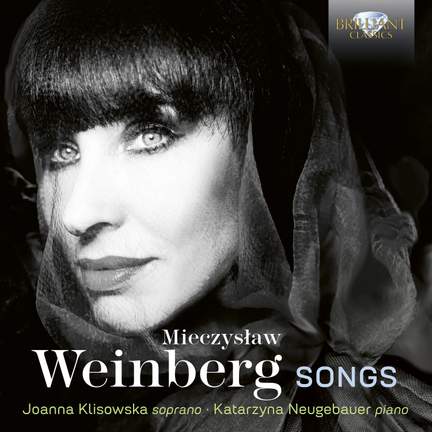
Weinberg: Songs
Joanna Klisowska (soprano), Katarzyna Neugebauer (piano)
Purchase product
About
The overdue revival of interest in Mieczysław Weinberg has focused on his chamber and orchestral music, with periodic revivals of pivotal operas such as The Passenger. As this new recording illustrates, song was no less significant as a facet of his creative personality, beginning with the cycle of Akazie (Acacias), which the 21-year-old Weinberg composed in 1940, having lately fled Warsaw and briefly settled in Minsk.
Each a minute or two long, the six Akazie unleash a passion out of proportion to their brevity. Weinberg later said that he wrote them as a distraction from the tragedy around him, but they speak of their time in their angular, expressionist vocal writing and supple, chromatic accompaniments. Most of the Jewish Songs Op.13 are similarly concise and direct, though their alternative title of ‘Children’s Songs’ hints at the lighter and more playful idiom.
Weinberg composed the cycle in 1943 to Yiddish texts by Izik Lejb Perez (1852-1915), and followed it a year later with another Yiddish collection, the Jewish Songs Op.17. The expressive climax of this later cycle is a powerfully restrained lament, ‘Tife griber, royte leym’ (Deep pits, crimson clay).
By this point, Weinberg was living in Moscow, and when he wrote the Three Romances Op.22, he chose to set texts by Poland’s greatest Romantic poet, Adam Mieckiewicz. Thus the songs radiate nostalgia for a lost homeland. In later cycles he also returned to his native Polish language, and to the work of his own favourite poet, Julian Tuwim. Like Akazie, the Stare Listy (Old Letters) Op.77 set Tuwim’s poems with a moving simplicity.
Despite the often painful mood and subject matter, Weinberg writes with great sympathy for the singer, in melodic lines which naturally inflect the poetic text.
This unique collection of Weinberg’s song output features two Polish musicians who have made international careers. Soprano Joanna Klisowska has made recordings of Baroque and Classical-era repertoire with many of Europe’s premier-early music ensembles; she is also committed to reviving the neglected artsong output of her own country, and this album should serve to put Weinberg back on the musical map as a songwriter who never forgot his Polish roots.
Contents and tracklist
- Joanna Klisowska, Katarzyna Neugebauer
- Joanna Klisowska, Katarzyna Neugebauer
- Joanna Klisowska, Katarzyna Neugebauer
- Joanna Klisowska, Katarzyna Neugebauer
- Joanna Klisowska, Katarzyna Neugebauer