British Cello Works, Vol. 3
Lionel Handy (cello), Jennifer Walsh (piano)
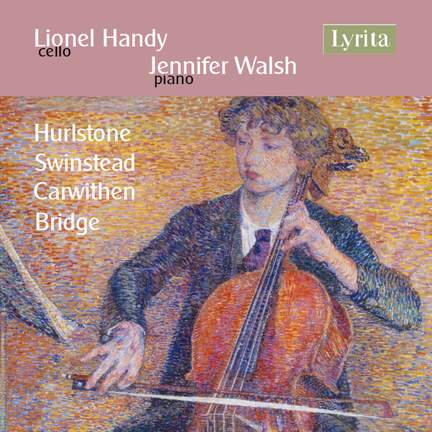
The discovery for me was William Hurlstone’s very strong Sonata of 1899, with its most original slow movement lament, slightly let down by the weak melody of the finale. He was admired by Parry...
British Cello Works, Vol. 3
Lionel Handy (cello), Jennifer Walsh (piano)
Purchase product
The discovery for me was William Hurlstone’s very strong Sonata of 1899, with its most original slow movement lament, slightly let down by the weak melody of the finale. He was admired by Parry...
About
Hurlstone’s Cello Sonata in D major (1899) was written for the noted cellist and composer May Mukle. In his review of the score, Havergal Brian opined that Hurlstone’s sonata ‘shows ripe and mature musicianship…’
The manuscript of Swinstead’s Cello Sonata was discovered by pianist Clive Williamson, while he was clearing the house of Vivian Langrish and his wife Ruth Harte, who were friends of Felix Swinstead. It is possible that this F major sonata may have been written just before the composer’s death and never given a public performance. Doreen Carwithen’s Cello Sonatina (1944) draws upon the stringed instrument’s sonorous, lyrical qualities. The often striking piano material is crucial to the unfolding narrative, rather than offering mere accompaniment and creates a genuine dialogue between the two protagonists.
Bridge’s two-movement Cello Sonata was begun in 1913, but not completed until 1917. Bridge always looked fondly upon the Cello Sonata, which has proved to be one of the composer’s most popular chamber works and remains the most regularly played of all his substantial pieces for two players.
Contents and tracklist
- Lionel Handy, Jennifer Walsh
- Lionel Handy, Jennifer Walsh
- Lionel Handy, Jennifer Walsh
- Lionel Handy, Jennifer Walsh
- Lionel Handy, Jennifer Walsh
Awards and reviews
 March 2025
The discovery for me was William Hurlstone’s very strong Sonata of 1899, with its most original slow movement lament, slightly let down by the weak melody of the finale. He was admired by Parry and Stanford, and as Handy and Walsh demonstrate, his was a major talent.