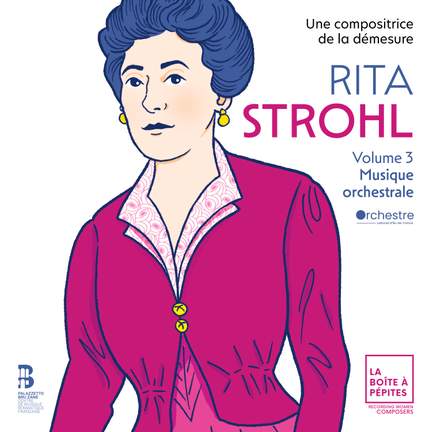
Rita Strohl: Volume 3, Musique Orchestrale
Orchestre national d'Ile-de-France, Case Scaglione, Marie Perbost, Lucile Richardot (mezzo-soprano)
Awards:
-
Presto Recordings of the Year, Finalists 2024

it’s dominated by the Symphonie de la Forêt of 1901, an impressive four-movement work, strikingly scored – which is more than enough to confirm that Strohl’s music deserves wider exposure; there’s...
Rita Strohl: Volume 3, Musique Orchestrale
Orchestre national d'Ile-de-France, Case Scaglione, Marie Perbost, Lucile Richardot (mezzo-soprano)
Purchase product
Awards:
-
Presto Recordings of the Year, Finalists 2024
it’s dominated by the Symphonie de la Forêt of 1901, an impressive four-movement work, strikingly scored – which is more than enough to confirm that Strohl’s music deserves wider exposure; there’s...
About
With Les Cygnes (The Swans) and the Symphonie de la forêt (Forest Symphony), Rita Strohl sought a form of communion with nature, a decisive turning point towards a musical style that became increasingly symbolist and spiritual, which subsequently led her to compose grand lyrical and mystical works such as Yajnavalkya.
“She gave language to the most sublime abstractions, clad water and fire in orchestral flesh, and suggested through sound the motions of atoms and sap - Rita Strohl, a cosmic musician” – Carlos Larronde, Le Soir, 1931
Contents and tracklist
- Orchestre national d'Ile-de-France, Case Scaglione
I. L'Étang
Track length15:30
This track is only available as an album download.
IV. Chasse à l'aurore – Aurore et lever de soleil
Track length18:54
This track is only available as an album download.
- Orchestre national d'Ile-de-France, Case Scaglione, Marie Perbost
- Orchestre national d'Ile-de-France, Case Scaglione, Marie Perbost
- Orchestre national d'Ile-de-France, Case Scaglione, Lucile Richardot
- Orchestre national d'Ile-de-France, Case Scaglione, Lucile Richardot
- Orchestre national d'Ile-de-France, Case Scaglione
Awards and reviews
-
Presto Recordings of the YearFinalists 2024
 10th October 2024
it’s dominated by the Symphonie de la Forêt of 1901, an impressive four-movement work, strikingly scored – which is more than enough to confirm that Strohl’s music deserves wider exposure; there’s a distinctly original voice here that needs to be heard.