Special offer. Kuniko Plays Reich Ii
Kuniko
It's an illuminating, flawlessly performed survey of two halves: the first, rich with the vibrant freshness of his early process work, and the second no less driven or clear, but arguably less...
Special offer. Kuniko Plays Reich Ii
Kuniko
Purchase product
It's an illuminating, flawlessly performed survey of two halves: the first, rich with the vibrant freshness of his early process work, and the second no less driven or clear, but arguably less...
About
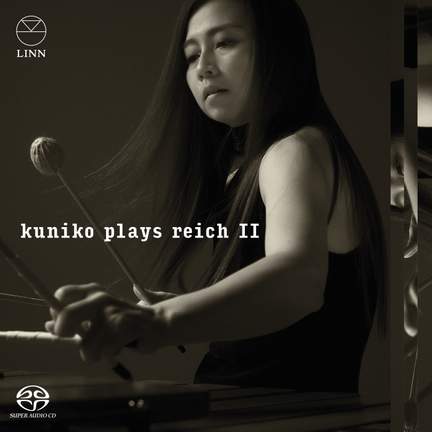
Following the tremendous success of her 2011 album Kuniko Plays Reich, and subsequent recordings of works by the pioneering composer, percussionist Kuniko has established a reputation as one of the foremost interpreters of Steve Reich. Here she has recorded Kuniko Plays Reich II, a bold programme of innovative works which span Reich's artistic career and showcase some of his groundbreaking techniques. Composed in his early thirties, Piano Phase is performed in Kuniko's own mesmerising arrangement for two vibraphones; characteristically Kuniko plays both parts. While Nagoya Marimbas uses some composition tools which Reich popularised in Piano Phase, Four Organs draws its inspiration from the Middle Ages. Closing this riveting recital, Mallet Quartet sees Reich in a more melodically expansive mood, albeit with his trademark tight rhythmic drive and canonic textures.
Contents and tracklist
- Kuniko
- Kuniko
- Kuniko
- Kuniko
Awards and reviews
 June 2024
It's an illuminating, flawlessly performed survey of two halves: the first, rich with the vibrant freshness of his early process work, and the second no less driven or clear, but arguably less compelling in his subsequent take-up of more traditional elements of melody and harmony.