Mahler: Symphony No. 6
Symphonie-Orchester des Bayerischen Rundfunks, Sir Simon Rattle
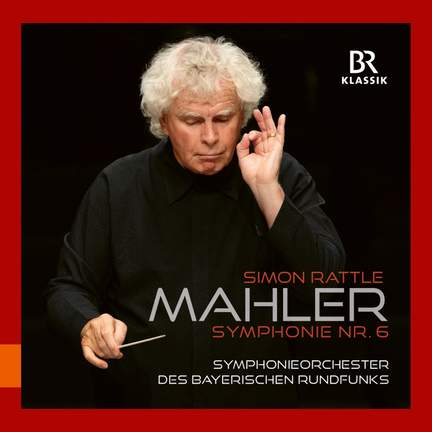
Awards:
-
Gramophone Magazine, April 2024, Recording of the Month

-
Gramophone Awards, 2024 Shortlist, Shortlisted - Orchestral

-
Presto Recordings of the Year, Finalists 2024

-
International Classical Music Awards, 2025, Nominated - Symphonic Music

-
Gramophone Magazine, Critics' Choice 2024
There’s no doubt that the Munich-based orchestra is among the best in the world today...But what lifts this up among the very best Sixth Symphony recordings is the finale – this time perfectly...
Mahler: Symphony No. 6
Symphonie-Orchester des Bayerischen Rundfunks, Sir Simon Rattle
Purchase product
Awards:
-
Gramophone Magazine, April 2024, Recording of the Month
-
Gramophone Awards, 2024 Shortlist, Shortlisted - Orchestral
-
Presto Recordings of the Year, Finalists 2024
-
International Classical Music Awards, 2025, Nominated - Symphonic Music
-
Gramophone Magazine, Critics' Choice 2024
There’s no doubt that the Munich-based orchestra is among the best in the world today...But what lifts this up among the very best Sixth Symphony recordings is the finale – this time perfectly...
About
"Among Simon Rattle's first concert programmes as the new chief conductor of the Bavarian Radio Symphony Orchestra was Gustav Mahler's Sixth Symphony. The performances marked the beginning of a new chapter in Mahler interpretation, for Rattle, like his predecessors Jansons, Maazel and Kubelík, is an ardent admirer of the composer. BR-KLASSIK has now released the live recording of the concerts. Gustav Mahler's Sixth Symphony is perhaps the darkest work he ever wrote – its nickname is “The Tragic”. And there is something almost destructive about the final movement. ""But strangely enough,"" says Simon Rattle, ""it is also a very classical symphony. Yes, it is extreme, but for long stretches it is less wild than other works of his – although of course it does convey a harrowing message. But it's like a lot of great works: there are always different ways of reading them. I've been conducting the Sixth for forty years now, and over time I’ve come to realise that it also contains hope."" Mahler composed his Sixth Symphony during the summers of 1903 and 1904 at his “composer's cottage” in Maiernigg, near Klagenfurt. At the Vienna performance in 1907 (the third under his baton), he called it the ""Tragic Symphony"" – a nickname that soon became the stuff of legend. In particular, the darkness and devastating hopelessness of the finale – written at a time when he was at the high point of his life, both professionally and personally – are puzzling. Even his wife Alma could not quite explain the contradiction. As always, it was in and through music that Mahler came to terms with his experiences, exploring themes such as farewell, the meaning of existence, death, redemption, the afterlife, and love. More than other Mahler works, the Sixth Symphony is committed to ""classical"" symphonic form: it is in four movements and has no vocal parts. Despite all the liberties it takes, the opening movement follows sonata form. The Andante draws on the rondo form, as do the Scherzo and the Finale. The march, which sets the tone from the very first note of the first movement, plays a major role. Very unusually, even the Scherzo has march-like features and seems like a parodistic paraphrase of the opening, with a change of perspective. Simon Rattle concludes: “I think Mahler presents here the whole package of a colossal life – and that includes love and optimism."""
Contents and tracklist
Awards and reviews
-
Gramophone MagazineApril 2024Recording of the Month
-
Presto Recordings of the YearFinalists 2024
-
International Classical Music Awards2025Nominated - Symphonic Music
-
Gramophone MagazineCritics' Choice 2024
 May 2024
There’s no doubt that the Munich-based orchestra is among the best in the world today...But what lifts this up among the very best Sixth Symphony recordings is the finale – this time perfectly paced through its demanding half-hour span of march mania, baleful warnings and brief optimisms.
 April 2024
It feels lived-in, inhabited, and like the recent Ninth blessed by playing from an orchestra which not only shares his vision but brings it off the page with extraordinary artistry.