L'Echo Du Danube
Sofia Diniz (viola da gamba)
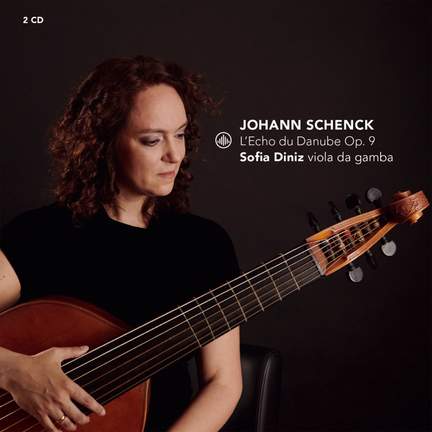
There is much to admire in these performances. Gambist Sofia Diniz presents these sonatas with grace and generosity of sound. There’s an enticing liveliness to her articulation.
L'Echo Du Danube
Sofia Diniz (viola da gamba)
Purchase product
There is much to admire in these performances. Gambist Sofia Diniz presents these sonatas with grace and generosity of sound. There’s an enticing liveliness to her articulation.
About
L'Echo du Danube is the poetic title given by Johann Schenck to his collection of pieces for viola da gamba, first published around 1703/04 as Opus 9 in Amsterdam by Estienne Roger -- the most important music printer at the time.
L'Echo du Danube is Schenk's last complete work to survive, a fact that gives these pieces the weight of a "musical testament. It comprises six sonatas for solo viol: the first two sonatas with basso continuo accompaniment, the next two also with basso continuo but this time ad libitum (optional), and the two last ones for viola da gamba without any accompaniment. Although Marin Marais already had published his first book of Pieces de Viole in 1686 and the flourishing English viol tradition was well known in Northern Europe, Schenk's approach to the instrument is an important step in the process of creating an independent repertoire, specifically written for the viol by composers who were themselves performers and masters of its idiomatic idiosyncrasies. Although Schenck fully explores the potential of the viol as a melodic instrument, he clearly favoured, its possibilities of playing chords, in a manner strongly influenced by lute playing and repertoire: he sought to show the viol as an instrument that is harmonically independent, appropriate for polyphonic writing besides its talent for melodic singing. Hence his writing in such a distinctive way: abundantly using chords and double stops; continually alternating between the bass and the high register; and striving for an effective combination of luxurious harmony and depth of sound, without losing sight of the delicately cantabile voice of the viola.
Contents and tracklist
- Fernando Miguel Jalôto, Sofia Diniz (viola da gamba)
- Fernando Miguel Jalôto, Sofia Diniz (viola da gamba)
- Fernando Miguel Jalôto, Sofia Diniz (viola da gamba)
- Fernando Miguel Jalôto, Sofia Diniz (viola da gamba)
- Fernando Miguel Jalôto, Sofia Diniz (viola da gamba)
- Fernando Miguel Jalôto, Sofia Diniz (viola da gamba)
Awards and reviews
 April 2024
There is much to admire in these performances. Gambist Sofia Diniz presents these sonatas with grace and generosity of sound. There’s an enticing liveliness to her articulation.