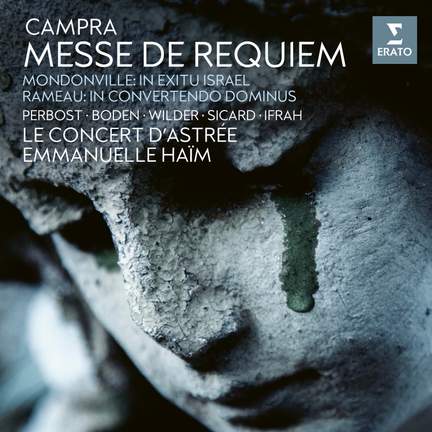
Special offer. Campra, Rameau, Mondonville
Marie Perbost, Emmanuelle Ifrah (sopranos), Samuel Boden (countertenor), Zachary Wilder (tenor), Victor Sicard (baritone)
Le Concert d’Astrée, Emmanuelle Haïm
Awards:
-
Presto Editor's Choice, August 2023

André Campra's Requiem of 1695 (commissioned in memory of the Archbishop of Paris) is the main event here, but the two 'grands motets' are much more than makeweights: Rameau's In Convertendo...
Special offer. Campra, Rameau, Mondonville
Marie Perbost, Emmanuelle Ifrah (sopranos), Samuel Boden (countertenor), Zachary Wilder (tenor), Victor Sicard (baritone)
Le Concert d’Astrée, Emmanuelle Haïm
Purchase product
Awards:
-
Presto Editor's Choice, August 2023
André Campra's Requiem of 1695 (commissioned in memory of the Archbishop of Paris) is the main event here, but the two 'grands motets' are much more than makeweights: Rameau's In Convertendo...
About
Emmanuelle Haïm, a Baroque expert “with an instinct for the crucial balance between energy and eloquence” (New York Times), directs the orchestra and singers of her ensemble Le Concert d’Astrée in choral works by three French composers of the 18th century: Rameau, Campra and Mondonville. The programme, illustrating the transition from sorrow to joy and from darkness into light, was recorded in the splendid Chapelle Royale of the palace of Versailles. When Haïm, Le Concert d’Astrée and the soloists who appear on this recording performed all three works in Dijon, where Rameau was born, Forum Opéra – noting that Haïm’s conducting “excelled as much through its vigour as its poetry” – described “a concert from which one emerged with a profound sense of happiness”.
Contents and tracklist
- Emmanuelle Ifrah (soprano), Samuel Boden (countertenor), Victor Sicard (baritone), Marie Perbost (soprano), Zachary Wilder (tenor), Le Concert d'Astrée (vocal & instrumental ensemble)
- Emmanuelle Haïm
- Marie Perbost (soprano), Samuel Boden (countertenor), Victor Sicard (baritone), Le Concert d'Astrée (vocal & instrumental ensemble)
- Emmanuelle Haïm
- Le Concert d'Astrée (vocal & instrumental ensemble), Samuel Boden (countertenor), Victor Sicard (baritone), Marie Perbost (soprano)
- Le Concert d'Astrée
- Emmanuelle Haïm
Awards and reviews
-
Presto Editor's ChoiceAugust 2023
 August 2023
André Campra's Requiem of 1695 (commissioned in memory of the Archbishop of Paris) is the main event here, but the two 'grands motets' are much more than makeweights: Rameau's In Convertendo sees a star turn from the agile baritone Victor Sicard, whilst Mondonville's In exitu Israel features some astonishingly vivid word-painting.