Special offer. Haydn: Complete Piano Trios, Vol. 2
Trio Gaspard (chamber ensemble)
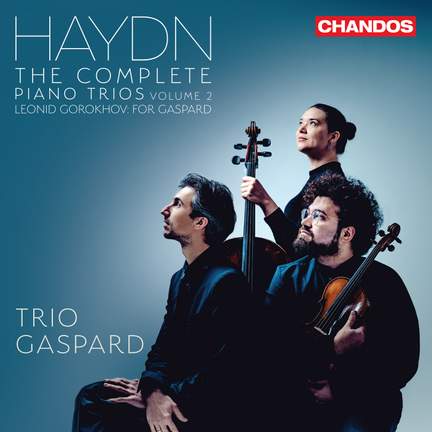
Once again, these three engaging performers have ranged across the beginning, middle and climax of Haydn’s career to compile a programme that can be enjoyed in its own right, performed with...
Special offer. Haydn: Complete Piano Trios, Vol. 2
Trio Gaspard (chamber ensemble)
Purchase product
Once again, these three engaging performers have ranged across the beginning, middle and climax of Haydn’s career to compile a programme that can be enjoyed in its own right, performed with...
About
Described by Gramophone as ‘an album of joyous, imaginative music-making that whets the appetite for future instalments’, the first volume of Trio Gaspard’s Haydn cycle was enthusiastically received by buyers and critics alike. As in the case of that first volume, the Trio has designed a programme for the second volume that works in its own right, and features trios from all periods of Haydn’s career. Three later works (Nos 33, 35, and 45) were all composed in 1794 / 95 and contrast with the early trio No. 7, from c. 1760, whilst the trio No. 21, from the composer’s middle period, was written in 1784 / 85. As in Volume 1, Trio Gaspard chooses to end the programme with another contemporary work reflective of the programme – in this instance For Gaspard by the cellist-composer Leonid Gorokhov. The first of the two movements (a common structure in Haydn’s trios), ‘Hidden D’ (a play on the popular reference to the ‘Haydn D’ major Cello Concerto) reworks numerous themes from that piece, among many others!
Contents and tracklist
Awards and reviews
 March 2023
Once again, these three engaging performers have ranged across the beginning, middle and climax of Haydn’s career to compile a programme that can be enjoyed in its own right, performed with a freshness, a warmth and a sense of humour that feels entirely on Haydn’s wavelength.
 26th February 2023
As with volume one in their Haydn series, the Gaspard eschew strict chronological order in favour of juxtaposing works from different periods — the new disc features the trios Nos 7, 21, 33, 35 and 45 — with the aim, beautifully realised again here, of encouraging listeners to join dots, find contrasts and marvel at Haydn’s prescience.