Special offer. Bright & Early
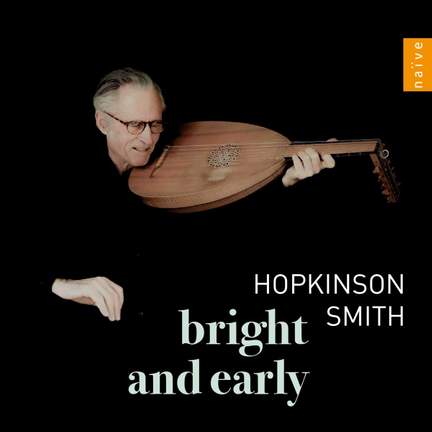
Hopkinson Smith (lute)
Awards:
-
International Classical Music Awards, 2024, Nominated - Early Music

Playing a six-course lute with an extra octave for the third course (double-string) and the upper octave unusually on the ‘thumb side’ for all courses (horses for courses, I guess), Smith here,...
Special offer. Bright & Early
Hopkinson Smith (lute)
Purchase product
Awards:
-
International Classical Music Awards, 2024, Nominated - Early Music
Playing a six-course lute with an extra octave for the third course (double-string) and the upper octave unusually on the ‘thumb side’ for all courses (horses for courses, I guess), Smith here,...
About
The “supreme poet of the lute” (Gramophone), Hopkinson Smith creates a subtle, intimate dialogue between Dalza and Spinacino, witnesses of the instrument’s flourishing culture in Italy at the dawn of the 16th Century.
Hopkinson Smith, that indefatigable pioneer for over forty years, eager hunter of the most distant scores and defender of restoring often obscure manuscripts, will stop at nothing in his exploration and revival of the huge repertoire of his instrument. In this recording, his art, underpinned by a vast historic knowledge together with a profound faith in intuition, examines the first music printed for the lute, and some of the first sources for the instrument to have reached us.
In a perfectly symmetrical programme structured around a central piece by Marchetto Cara, the Swiss American lutenist intertwines pieces inspired from popular dance by Joan Ambrosio Dalza and several free form ricercari by Francesco Spinacino, taken from collections of tablatures published in Venice in 1507 and 1508.
“Some critics may see my reconstruction of the music as heresy, but I considered it necessary, given the degree of confusion in which many of Spinacino’s works have reached us,” warns Hopkinson Smith. “I believed we had to either abandon the originals to their fate, never to be played, or tighten the loose threads of a convincing tapestry as a work of art.”
He weaves this subtle polyphony on a six-course lute built in the tradition of the late 15th Century, giving it heightened resonance and clarity of sound. Inspired by the mystery of these mysterious treasures evoking the distant times and reverie of the Middle Ages, Hopkinson Smith approaches these works with the humility of one who appreciates the incredible richness, and the expressive power of this solitary lutenist who has become a storyteller through his instrument.
Contents and tracklist
Awards and reviews
-
International Classical Music Awards2024Nominated - Early Music
 April 2023
Playing a six-course lute with an extra octave for the third course (double-string) and the upper octave unusually on the ‘thumb side’ for all courses (horses for courses, I guess), Smith here, as always, finds depth of meaning in the simplest gesture.