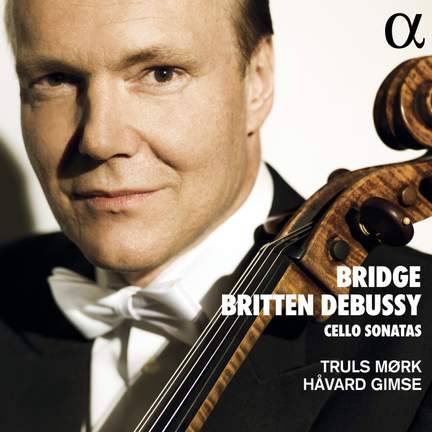
Bridge, Britten, Debussy: Cello Sonatas
Truls Mørk (cello), Håvard Gimse (piano)
Awards:
-
International Classical Music Awards, 2023, Nominated - Chamber Music

Marginally less juicy of tone and idiosyncratic of phrasing than Rostropovich, Mørk brings a classical poise and eloquence to his phrasing and a marvellous sensitivity to detail, while Gimse...
Bridge, Britten, Debussy: Cello Sonatas
Truls Mørk (cello), Håvard Gimse (piano)
Purchase product
Awards:
-
International Classical Music Awards, 2023, Nominated - Chamber Music
Marginally less juicy of tone and idiosyncratic of phrasing than Rostropovich, Mørk brings a classical poise and eloquence to his phrasing and a marvellous sensitivity to detail, while Gimse...
About
The great Norwegian cellist Truls Mørk makes a triumphal return to chamber music with his regular piano partner Håvard Gimse. The programme features two English composers, Benjamin Britten and his teacher Frank Bridge, whose Cello Sonata was written during the First World War and is tinged with despair and searing emotional force. Britten composed his Cello Sonata in 1961, following his meeting with Mstislav Rostropovich, to whom he dedicated the work. Another person traumatised by the Great War was Debussy, who wrote: ‘It was cowardly to think only of the horrors being committed, without trying to react by rebuilding, insofar as my strength allowed, a little of that beauty which is currently under attack.’ His Cello Sonata (1915) was the first of a series of six sonatas for various instruments that he planned to compose, only managing to write three before his death. As a determined Moravian nationalist, Janáček did not entitle his three-movement work of 1910 ‘sonata’; he called it Pohádka (Fairy tale) and based it on a poem by Vasily Zhukovsky.
Contents and tracklist
Awards and reviews
-
International Classical Music Awards2023Nominated - Chamber Music
 November 2022
Marginally less juicy of tone and idiosyncratic of phrasing than Rostropovich, Mørk brings a classical poise and eloquence to his phrasing and a marvellous sensitivity to detail, while Gimse is fully alive to the very different styles of piano writing in these four works.
 Awards Issue 2022
Any serious collection must have Rostropovich and Britten’s recordings of all four of these works, of course, but I’ll keep this handsomely recorded new album by their side.