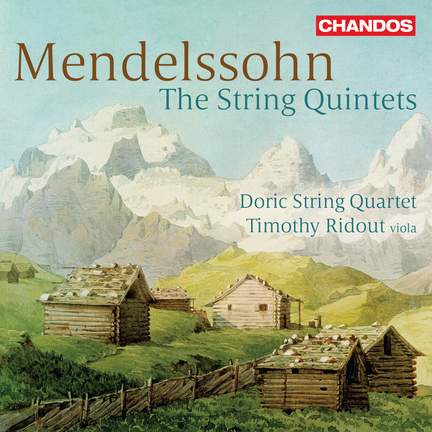
Mendelssohn: String Quintets
Doric String Quartet, Timothy Ridout (viola)
Awards:
-
Gramophone Magazine, April 2022, Editor's Choice

the Doric Quartet with Timothy Ridout make light of [No. 1's] formidable difficulties. Their very effective pianissimo playing stands them in particularly good stead in the quietly scurrying...
Mendelssohn: String Quintets
Doric String Quartet, Timothy Ridout (viola)
Purchase product
Awards:
-
Gramophone Magazine, April 2022, Editor's Choice
the Doric Quartet with Timothy Ridout make light of [No. 1's] formidable difficulties. Their very effective pianissimo playing stands them in particularly good stead in the quietly scurrying...
About
The Doric String Quartet is firmly established as one of the leading quartets of its generation, receiving enthusiastic responses from audiences and critics around the globe. Following their acclaimed recordings of Mendelssohn’s string quartets, here they are joined by leading violist Timothy Rideout for this album of his two string quintets. Mendelssohn's two String Quintets were written at the beginning and end of his short but remarkable compositional life. No 1 was written in 1826, shortly before the Overture to 'A Midsummer Night's Dream', when Mendelssohn was just seventeen. No.2 was written in 1845, when he was thirty-six, a year before the premier of Elijah and just two years before his death.
Contents and tracklist
Awards and reviews
-
Gramophone MagazineApril 2022Editor's Choice
 April 2022
the Doric Quartet with Timothy Ridout make light of [No. 1's] formidable difficulties. Their very effective pianissimo playing stands them in particularly good stead in the quietly scurrying scherzo...No Mendelssohn lover should be without this disc.
 April 2022
Minutely attentive to Mendelssohn’s detailed dynamic and phrase markings, they yield to none in polish and precision. True to form, they characterise with gusto.
 19th March 2022
They give full rein to the easy-going invention of Op 18, while treating its slow intermezzo, Mendelssohn’s 1832 replacement for the original second movement, with almost Beethovenian profundity, and the energy of their account of Op 87 is pretty irresistible, too.