Peteris Barisons: Three Preludes, Symphony No. 2
Liepāja Symphony Orchestra, Gintaras Rinkevičius
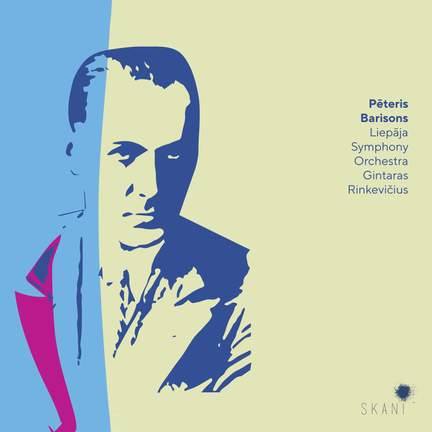
There’s a lot to enjoy here, as the Latvian composer Pēteris Barisons (1904-47) ranges in style from a Mendelssohn-like lightness in the Three Preludes to the rich, redblooded Romanticism of...
Peteris Barisons: Three Preludes, Symphony No. 2
Liepāja Symphony Orchestra, Gintaras Rinkevičius
Purchase product
There’s a lot to enjoy here, as the Latvian composer Pēteris Barisons (1904-47) ranges in style from a Mendelssohn-like lightness in the Three Preludes to the rich, redblooded Romanticism of...
About
This release contains previously unavailable symphonic works by Peteris Barisons (19041947) performed in a studio recording by Liepaja Symphony Orchestra (Gintaras Rinkevicius conducting), recorded at the Great Amber concert hall in Liepaja, 2021.
The 1930s are a particularly notable time for the development of Latvian music. This can be observed in the work of composers of all generations, as well as in music education, concert life, periodicals and the beauty of the Song Festivals. Throughout all these, Peteris Barisons is an active and fruitful participant. His dynamic and varied work in one area is particularly noteworthy that is his rich and bountiful achievement in the field of symphonic music.
In a relatively brief period of time, in the time that fate allowed him, beginning with the conclusion of his professional education until his death (19341947), he composed a number of larger and smaller symphonic scores: Symphony No. 1 (1934, 1935), Symphony No. 2 (The Romantic), the symphonic suites Ziedu vija (The Flower Wreath, 1937) and Bernibas riti (Childhood Mornings, 1946), the symphonic images Ligo (Midsummer, 1935), Tragiska poema (Tragic Poem, 1936) and Teika (Legenda) (A Tale (Legend), 1937), Latvju rapsodija (Latvian Rhapsody) for piano and orchestra (1945), unfinished works (including Symphony No. 3). We should also mention his key vocal symphonic works (the cantatas Gaisa stunda (In the Bright Hour), Dzimtene (Homeland), Brinumzeme (Wonderland), Naves sala (The Isle of Death).
Contents and tracklist
- Liepāja Symphony Orchestra, Gintaras Rinkevičius
- Liepāja Symphony Orchestra, Gintaras Rinkevičius
Awards and reviews
 June 2022
There’s a lot to enjoy here, as the Latvian composer Pēteris Barisons (1904-47) ranges in style from a Mendelssohn-like lightness in the Three Preludes to the rich, redblooded Romanticism of the Second Symphony, which also features a splendidly ominous march in the last movement.