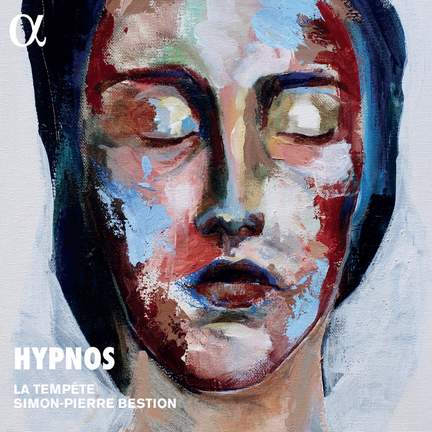
Hypnos
La Tempête, Simon-Pierre Bestion
Awards:
-
Presto Editor's Choice, January 2022

Bestion’s singers are very flexible, and frequently superb...they are equal to Scelsi’s quartertones; and they can sing ‘straight’ when needed. These stylistic shifts are not jarring.
Hypnos
La Tempête, Simon-Pierre Bestion
Purchase product
Awards:
-
Presto Editor's Choice, January 2022
Bestion’s singers are very flexible, and frequently superb...they are equal to Scelsi’s quartertones; and they can sing ‘straight’ when needed. These stylistic shifts are not jarring.
About
Hypnos, God of Sleep . . . Simon-Pierre Bestion’s recordings are often inspired by his desire to recreate a ritual. His aim here was to recreate a Requiem service, ‘the ceremony that accompanies the passage of a human being into the hereafter, while supporting the feelings of all who witness it. Making use of all the freedom that this act of re-creation afforded me, I constructed this programme without boundaries between repertories or different musical aesthetics – from the Middle Ages through the Renaissance to the twentieth century – selecting the works for their captivating musical material, their hypnotic and meditative dimension’. Intonations from Byzantine chant sit alongside guttural voices in Giacinto Scelsi and the English vocal style of John Tavener; Franco-Flemish Renaissance polyphony encounters the influences of eastern or western spiritual traditions present in the contemporary works.
Contents and tracklist
Spotlight on this release
-
An error occurred.
Try watching this video on www.youtube.com, or enable JavaScript if it is disabled in your browser.
Awards and reviews
-
Presto Editor's ChoiceJanuary 2022
 March 2022
Bestion’s singers are very flexible, and frequently superb...they are equal to Scelsi’s quartertones; and they can sing ‘straight’ when needed. These stylistic shifts are not jarring.
 January 2022
On paper, this composite requiem looks like an outlandishly eclectic prospect: a movement by Olivier Greif (1950–2000) nestles between contributions from Isaac and Senfl, and nigh-on five centuries separate the Libera me (Juan de Anchieta) from the ensuing Song for Athene by John Tavener. In practice it all feels entirely of a piece, with the singers of La Tempête taking every shift in style entirely in their stride.