Bruckner: Symphony No. 7
Netherlands Radio Philharmonic Orchestra, Bernard Haitink
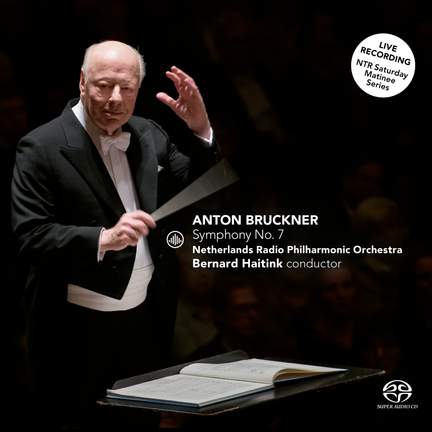
Awards:
-
Record Review, 6th November 2021, Record of the Week

-
International Classical Music Awards, 2022, Nominated - Symphonic Music

What we have is a fine, detailed performance – and it includes the disputed cymbal clash at the climax of the great slow movement, music to celebrate and mourn Richard Wagner – and an account...
Bruckner: Symphony No. 7
Netherlands Radio Philharmonic Orchestra, Bernard Haitink
Purchase product
Awards:
-
Record Review, 6th November 2021, Record of the Week
-
International Classical Music Awards, 2022, Nominated - Symphonic Music
What we have is a fine, detailed performance – and it includes the disputed cymbal clash at the climax of the great slow movement, music to celebrate and mourn Richard Wagner – and an account...
About
A live recording from 2019 of Bruckner's 7th Symphony with Bernard Haitink conducting the Netherlands Radio Philharmonic Orchestra.
Bernard Haitink was born and educated in Amsterdam. His conducting career began at the Netherlands Radio where in 1957 he became the Chief Conductor of the Radio Philharmonic Orchestra. The links between Bernard Haitink and the Radio Philharmonic Orchestra have withstood the test of time, even when his career was taking him all over the world. One fine example of this was Berlioz's Damnation of Faust in 1998, later issued on CD (CC 72517). He returned on 15 June 2019, when he gave his very last concert in Amsterdam, with Bruckner Symphony no. 7, a work that has always been especially dear to him.
Contents and tracklist
Awards and reviews
-
Record Review6th November 2021Record of the Week
-
International Classical Music Awards2022Nominated - Symphonic Music
 January 2022
What we have is a fine, detailed performance – and it includes the disputed cymbal clash at the climax of the great slow movement, music to celebrate and mourn Richard Wagner – and an account in which the last two movements don’t, as so often, seem an anticlimax.
 December 2021
The additional pliancy, transparency and expressive amplitude of the playing are difficult to resist and put the performance in a special class.