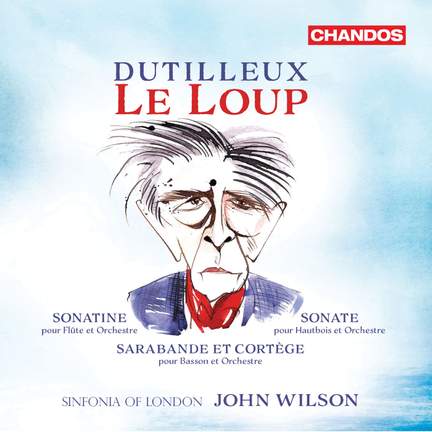
Dutilleux: Le Loup & Other Works
Adam Walker (flute), Juliana Koch (oboe), Jonathan Davies (bassoon), Sinfonia of London, John Wilson
Awards:
-
Presto Editor's Choice, May 2021

-
BBC Music Magazine, August 2021, Orchestral Choice

-
Presto Recordings of the Year, Finalist 2021

-
Record Review, Records of the Year 2021

-
BBC Music Magazine Awards, 2022, Winner - Orchestral

Wilson seizes on the opportunities to bring out the vivid colours of Dutilleux’s score, with the brass blazing superbly and every rhythm alive with meaning. No less striking is the music’s lyricism,...
Dutilleux: Le Loup & Other Works
Adam Walker (flute), Juliana Koch (oboe), Jonathan Davies (bassoon), Sinfonia of London, John Wilson
Purchase product
Awards:
-
Presto Editor's Choice, May 2021
-
BBC Music Magazine, August 2021, Orchestral Choice
-
Presto Recordings of the Year, Finalist 2021
-
Record Review, Records of the Year 2021
-
BBC Music Magazine Awards, 2022, Winner - Orchestral
Wilson seizes on the opportunities to bring out the vivid colours of Dutilleux’s score, with the brass blazing superbly and every rhythm alive with meaning. No less striking is the music’s lyricism,...
About
Following the success of their previous album, English Music for Strings, John Wilson and his Sinfonia of London turn their attention to the music of Henri Dutilleux. His ballet Le Loup was composed as a commission for Roland Petit’s dance company and premièred in Paris in March 1953. Rarely recorded – this is the first recording by a non-French orchestra – the work unfolds in three tableaux and tells a convoluted tale of a bridegroom who jilts his bride (to run away with a gypsy) by persuading her that he has been changed into a wolf. Over time she discovers that the wolf is real, but her feelings turn from terror to love and when the alarmed villagers hunt the wolf, she defends him and dies at his side.
The album is completed by three world-première recordings of new orchestrations (by Kenneth Hesketh) of wind solos written for the Paris Conservatoire in the 1940s. Both the Sarabande et Cortège and Sonate pour hautbois are virtuosic tours de force for their soloists, as is the Sonatine pour flûte, which displays the lyricism, agility, and sparkling incisive qualities of the flute in what became Dutilleux’s most-performed work.
Recorded in Surround Sound, the album is available as a hybrid-SACD.
Contents and tracklist
- Orch. K. Hesketh
- Adam Walker (flute)
- Sinfonia of London
- John Wilson
- Orch. K. Hesketh
- Juliana Koch (oboe)
- Sinfonia of London
- John Wilson
- Orch. K. Hesketh
- Jonathan Davies (bassoon)
- Sinfonia of London
- John Wilson
Awards and reviews
-
Presto Editor's ChoiceMay 2021
-
BBC Music MagazineAugust 2021Orchestral Choice
-
Presto Recordings of the YearFinalist 2021
-
Record ReviewRecords of the Year 2021
 August 2021
Wilson seizes on the opportunities to bring out the vivid colours of Dutilleux’s score, with the brass blazing superbly and every rhythm alive with meaning. No less striking is the music’s lyricism, phrased by Wilson with great tenderness.
 Jan/Feb 2022
[Le Loup] Wilson brings out the theatricality of the score through his pointing of musical incidents, clarity of line, and sheer zest...Wilson’s couplings are uniquely interesting...one of the best in Chandos’s series with Wilson and his London Sinfonia.
 July 2021
As one might expect, it’s flawlessly done, scrupulously paced and played, with Dutilleux’s often extraordinary colours and textures beautifully explored.
 May 2021
Listening to this shimmeringly sexy, deliciously macabre account of Dutilleux’s 1953 ballet, it’s difficult to fathom why the piece isn’t better known and loved: think Ravel’s Ma mère l'Oye shot through with echoes of Peter and the Wolf. The strings are particularly magical in the Boudoir and Forest episodes, and flautist Adam Walker (who also shines in Kenneth Hesketh’s orchestration of the Sonatine for flute) contributes some beguiling solos.
 23rd May 2021
Wilson and Sinfonia of London give a polished, warm performance [of Le Loup], as they do of Hesketh’s deft arrangements of three “pieces de concours” from the 1940s, all more than mere vehicles of virtuosity.