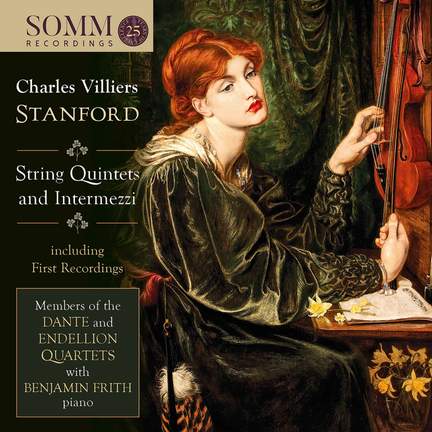
Stanford: String Quintets & Intermezzi
Members of the Dante and Endellion Quartets, Benjamin Frith (piano)
Their performances of the quintets are exemplary; executed with the utmost precision, impeccably balanced voices, lush in tone, and phrased with great care and affection. Jenkinson partners...
Stanford: String Quintets & Intermezzi
Members of the Dante and Endellion Quartets, Benjamin Frith (piano)
Purchase product
Their performances of the quintets are exemplary; executed with the utmost precision, impeccably balanced voices, lush in tone, and phrased with great care and affection. Jenkinson partners...
About
"SOMM Recordings’ widely acclaimed survey of Charles Villiers Stanford’s chamber music continues with his two String Quintets and Three Intermezzi arranged for cello and piano. A unique collaboration between members of the Dante and Endellion Quartets, together with pianist Benjamin Frith, sees first recordings of the String Quintet No.2 in C minor and the arrangement of the Three Intermezzi. Composed with Stanford’s lifelong mentor, the legendary violinist Joseph Joachim, in mind, the Quintets are the product of a master craftsman speaking with his own distinctive voice. Both were first performed in 1904 and separately owe a direct and glancing debt to Brahms. The First echoes the three-movement structure of Brahms’ First Quintet and its melodious warmth although its second movement strikingly makes use of an archaic form of Irish traditional singing – sean nós (literally “old style”). Composed to mark the 60th anniversary of Joachim’s first visit to Britain, the Second Quintet shares what Stanford authority Jeremy Dibble in his erudite booklet notes describes as “the same serious demeanour and a similar outlook towards grand architecture” of Brahms’ First Symphony, which Joachim conducted on that occasion. Originally composed for clarinet and piano, the Three Intermezzi of 1880 display a masterly interplay between cello and piano in Stanford’s own arrangement."
Contents and tracklist
- Krysia Osostowicz, Yuko Inoue, Richard Jenkinson, Ralph de Souza, Garfield Jackson
- Richard Jenkinson, Benjamin Frith
- Krysia Osostowicz, Yuko Inoue, Richard Jenkinson, Ralph de Souza, Garfield Jackson
Awards and reviews
 July/August 2021
Their performances of the quintets are exemplary; executed with the utmost precision, impeccably balanced voices, lush in tone, and phrased with great care and affection. Jenkinson partners with Benjamin Frith at the piano for the Three Intermezzi, which are likewise played with great distinction…the recorded sound is marvelous.
 February 2021
Listening to this vibrant new recording, what struck me was...the freshness, the spontaneity, the instinctive ‘rightness’ of Stanford’s writing for strings. This might be the most satisfying body of work in this genre by any British composer before Frank Bridge...Cellist Richard Jenkinson and pianist Benjamin Frith play the Schumannesque Three Intermezzi with unaffected warmth; a lovely bonus on a highly rewarding album.
 22nd November 2020
Three quarters of the Dante Quartet and half of the Endellion Quartet join forces in richly expressed performances of these beautifully wrought works, both cast in a post-Brahmsian Romantic mould.