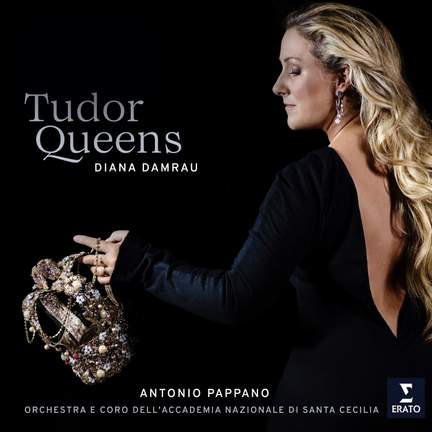
Special offer. The Tudor Queens
Diana Damrau (soprano), Orchestra e Coro dell'Accademia Nazionale di Santa Cecilia, Antonio Pappano
Awards:
-
BBC Music Magazine, December 2020, Recording of the Month

-
Presto Recordings of the Year, Finalist 2020

Damrau, luminous of voice, is surely the perfect exponent of this repertoire: adept at surmounting the music’s technical challenges in its dramatic moments, yet equally capable of exhibiting...
Special offer. The Tudor Queens
Diana Damrau (soprano), Orchestra e Coro dell'Accademia Nazionale di Santa Cecilia, Antonio Pappano
Purchase product
Awards:
-
BBC Music Magazine, December 2020, Recording of the Month
-
Presto Recordings of the Year, Finalist 2020
Damrau, luminous of voice, is surely the perfect exponent of this repertoire: adept at surmounting the music’s technical challenges in its dramatic moments, yet equally capable of exhibiting...
About
Soprano Diana Damrau assumes the crowns of three different Tudor queens, the central characters in operas by Donizetti: Anne Boleyn (Anna Bolena), Mary, Queen of Scots (Maria Stuarda), and Elizabeth I (Roberto Devereux). With Antonio Pappano and the Orchestra and Chorus of Rome’s Accademia Nazionale di Santa Cecilia, she performs the substantial and climactic final scene of each work. When Damrau sang Maria Stuarda at the Zurich Opera, the Neue Zürcher Zeitung wrote: “She commands a voice that seems to have no limits. Her coloratura is stunning, her vocal range impressive, and her dynamic shadings are breath-taking. Damrau is in a class of her own.”
Contents and tracklist
- Diana Damrau (soprano), Sara Rocchi (mezzo-soprano), Saverio Fiore (tenor), Fabrizio Beggi (bass), Domenico Pellicola (tenor)
- Coro dell'Accademia Nazionale Di Santa Cecilia, Orchestra dell'Accademia Nazionale di Santa Cecilia
- Antonio Pappano
- Diana Damrau (soprano), Fabrizio Beggi (bass), Sara Rocchi (mezzo-soprano), Domenico Pellicola (tenor), Andrii Ganchuk (baritone)
- Coro dell'Accademia Nazionale Di Santa Cecilia, Orchestra dell'Accademia Nazionale di Santa Cecilia
- Antonio Pappano
- Diana Damrau (soprano), Saverio Fiore (tenor), Irida Dragoti (mezzo-soprano), Andrii Ganchuk (baritone)
- Coro dell'Accademia Nazionale Di Santa Cecilia, Orchestra dell'Accademia Nazionale di Santa Cecilia
- Antonio Pappano
Spotlight on this release
-
An error occurred.
Try watching this video on www.youtube.com, or enable JavaScript if it is disabled in your browser.
-
An error occurred.
Try watching this video on www.youtube.com, or enable JavaScript if it is disabled in your browser.
-
Antonio Pappano on Donizetti's Queens
21st Oct 2020
The conductor talks to Katherine about recording the final scenes of Maria Stuarda, Anna Bolena and Roberto Devereux with Diana Damrau and the Orchestra e Coro dell'Accademia Nazionale di Santa Cecilia for Warner Classics.

Awards and reviews
-
BBC Music MagazineDecember 2020Recording of the Month
-
Presto Recordings of the YearFinalist 2020
 December 2020
Damrau, luminous of voice, is surely the perfect exponent of this repertoire: adept at surmounting the music’s technical challenges in its dramatic moments, yet equally capable of exhibiting the tenderness for which these roles call...Pappano coaxes the most delicate and refined of performances from the Orchestra and Chorus of the Accademia Nazionale di Santa Cecilia.
 December 2020
The German soprano’s recital covers repertoire familiar to Donizetti fans and well suited to her skills, though there’s a sense in which her diverse monarchs register as essentially one character in three different situations...there’s plenty of variety of tone as well as engagement with the text, and she can get around the notes, if not, perhaps, with quite the clarity of tone of yore...It may sound like a cliché, but [Pappano] does literally find things in the score that pass other interpreters by.
Opera Now September 2020
[Damrau] decorates with taste, and trills with ease, particularly confidently in Anna’s ‘Coppia iniqua’, where she places a trill firmly on the series of ascending notes, and vocalises even more elaborately in the repeat verse. She manages her voice adroitly, avoiding chest tones until she hits middle C and the D above, unless she feels that the drama warrants that extra bite. At the conclusion of Maria Stuarda and Roberto Devereux, Damrau nails thrilling high Ds, both hit with volume and aplomb.