Brahms: Symphony No. 4
Swedish Chamber Orchestra, Thomas Dausgaard
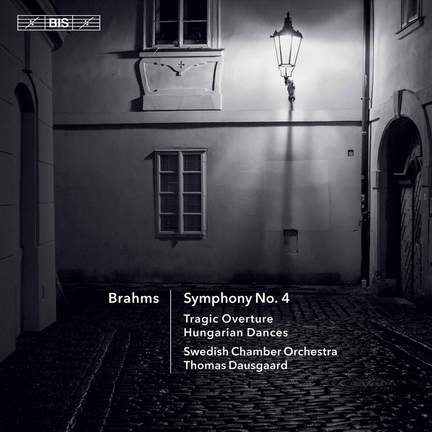
Brahms, who was in favour of smaller orchestras, would surely have welcomed the 39-strong Swedish Chamber Orchestra’s performances. He might also have approved of Thomas Dausgaard’s flexible...
Brahms: Symphony No. 4
Swedish Chamber Orchestra, Thomas Dausgaard
Purchase product
Brahms, who was in favour of smaller orchestras, would surely have welcomed the 39-strong Swedish Chamber Orchestra’s performances. He might also have approved of Thomas Dausgaard’s flexible...
About
"Begun in 2012 with the release of Symphony No. 1, Thomas Dausgaard’s four-disc traversal of the symphonies of Johannes Brahms is here brought to a close with the composer’s final work in the genre. The E minor Symphony is sometimes described as Brahms’ ‘elegiac symphony’, and has been called ‘one of the greatest orchestral works since Beethoven’. Typical for the composer is the striking degree of motivic relationships throughout the work. This includes the finale in which Brahms demonstrates his full mastery in a towering Passacaglia consisting of 30 variations and a coda. The smallish forces of the Swedish Chamber Orchestra contribute to a transparency and clarity which bring out the finer details of Brahms’ compositional web. As on previous instalments, the symphony is coupled with other works by Brahms. Included on the present disc is another late work, Tragic Overture, which concludes the programme. These two ‘serious’ works frame some of the most rousing and ebullient music Brahms ever wrote, namely his Hungarian Dances. Composed for piano four-hands, the 21 dances became immensely popular, and Brahms arranged three of them for orchestra himself. Having made his own orchestrations of the remaining 18 dances, Thomas Dausgaard has recorded the full set for his Brahms cycle, with the final nine dances included here."
Contents and tracklist
Awards and reviews
 13th September 2020
Brahms, who was in favour of smaller orchestras, would surely have welcomed the 39-strong Swedish Chamber Orchestra’s performances. He might also have approved of Thomas Dausgaard’s flexible tempo in the opening movement of the Fourth, and the finale’s, and the Tragic Overture’s, powerful drive.