Special offer. Schumann: Piano Works
Klara Min (piano)
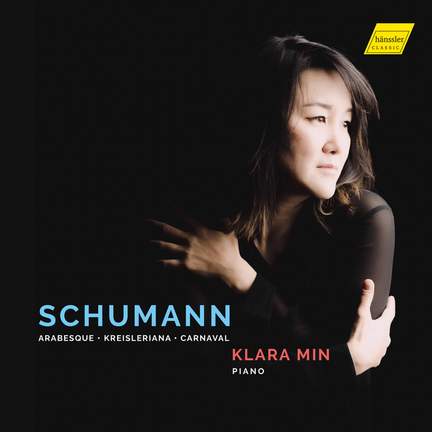
Min’s pearly articulation enables Kreisleriana to sparkle. She cherishes the inner voices, though never preciously: this is very intelligent playing … A revelatory disc.
Special offer. Schumann: Piano Works
Klara Min (piano)
Purchase product
Min’s pearly articulation enables Kreisleriana to sparkle. She cherishes the inner voices, though never preciously: this is very intelligent playing … A revelatory disc.
About
"Klara Min about Schumann: “I learned to love him in time more than any other composers, most firmly, closely and freely to my heart.”
Schumann was the first composer who used the word Arabesque to name one of his works. It showed new artistic possibilities in piano music accessible to non-professional players. The title ‘Kreisleriana’ is borrowed from E.T.A. Hoffmann’s novels and reflects the closeness of Schumann to the kindred spirit and thought of the Romantic writers. As source of inspiration for the work ‘Carnaval’ the composer used scenes of a masked ball derived from a literary work by J.P.F. Richter.Klara Min about Schumann: “I learned to love him in time more than any other composers, most firmly, closely and freely to my heart.”
Schumann was the first composer who used the word Arabesque to name one of his works. It showed new artistic possibilities in piano music accessible to non-professional players. The title ‘Kreisleriana’ is borrowed from E.T.A. Hoffmann’s novels and reflects the closeness of Schumann to the kindred spirit and thought of the Romantic writers. As source of inspiration for the work ‘Carnaval’ the composer used scenes of a masked ball derived from a literary work by J.P.F. Richter.Klara Min about Schumann: “I learned to love him in time more than any other composers, most firmly, closely and freely to my heart.”
Schumann was the first composer who used the word Arabesque to name one of his works. It showed new artistic possibilities in piano music accessible to non-professional players. The title ‘Kreisleriana’ is borrowed from E.T.A. Hoffmann’s novels and reflects the closeness of Schumann to the kindred spirit and thought of the Romantic writers. As source of inspiration for the work ‘Carnaval’ the composer used scenes of a masked ball derived from a literary work by J.P.F. Richter.Klara Min about Schumann: “I learned to love him in time more than any other composers, most firmly, closely and freely to my heart.”
Schumann was the first composer who used the word Arabesque to name one of his works. It showed new artistic possibilities in piano music accessible to non-professional players. The title ‘Kreisleriana’ is borrowed from E.T.A. Hoffmann’s novels and reflects the closeness of Schumann to the kindred spirit and thought of the Romantic writers. As source of inspiration for the work ‘Carnaval’ the composer used scenes of a masked ball derived from a literary work by J.P.F. Richter.Klara Min about Schumann: “I learned to love him in time more than any other composers, most firmly, closely and freely to my heart.”
Schumann was the first composer who used the word Arabesque to name one of his works. It showed new artistic possibilities in piano music accessible to non-professional players. The title ‘Kreisleriana’ is borrowed from E.T.A. Hoffmann’s novels and reflects the closeness of Schumann to the kindred spirit and thought of the Romantic writers. As source of inspiration for the work ‘Carnaval’ the composer used scenes of a masked ball derived from a literary work by J.P.F. Richter.Klara Min about Schumann: “I learned to love him in time more than any other composers, most firmly, closely and freely to my heart.”
Schumann was the first composer who used the word Arabesque to name one of his works. It showed new artistic possibilities in piano music accessible to non-professional players. The title ‘Kreisleriana’ is borrowed from E.T.A. Hoffmann’s novels and reflects the closeness of Schumann to the kindred spirit and thought of the Romantic writers. As source of inspiration for the work ‘Carnaval’ the composer used scenes of a masked ball derived from a literary work by J.P.F. Richter."
Contents and tracklist
- Klara Min (piano)
- Klara Min (piano)
- Klara Min (piano)
Awards and reviews
 September/October 2020
Min’s pearly articulation enables Kreisleriana to sparkle. She cherishes the inner voices, though never preciously: this is very intelligent playing … A revelatory disc.