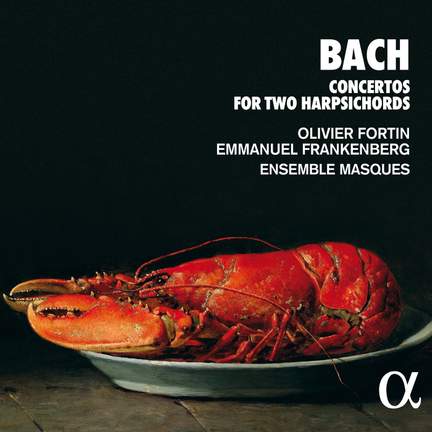
Bach: Concertos for Two Harpsichords
Ensemble Masques, Emmanuel Frankenberg, Olivier Fortin
Olivier Fortin, Emmanuel Frankenburg and Ensemble Masques give warm-blooded performances of the music. Their approach is stylish in matters of ornament and articulation, and the pervasive fugal...
Bach: Concertos for Two Harpsichords
Ensemble Masques, Emmanuel Frankenberg, Olivier Fortin
Purchase product
Olivier Fortin, Emmanuel Frankenburg and Ensemble Masques give warm-blooded performances of the music. Their approach is stylish in matters of ornament and articulation, and the pervasive fugal...
About
The practice of composing for two keyboard instruments, very common in the illustrious Bach family, naturally achieved its apotheosis with Johann Sebastian, whose three 'Concertos for Two Harpsichords' are performed here by Olivier Fortin and Emmanuel Frankenberg with the Ensemble Masques. These works, particularly the 'Concertos in C Minor', are among the composer's most admired. They suggest a conception of the concerto specific to Bach. Rather than a dialogue between several individual entities, the piece presents a subtle intertwining of melodic lines and blurs the distinction between solo and tutti parts by making them respond to and quote each other, thus illustrating the principle of harmony dear to the composer. Finally, the recording on two harpsichords of the 'Prelude and Fugue, BWV552', originally composed for organ, is in keeping with the nineteenth-century tradition of transposing Bach's works with the aim of giving their refined polyphony greater clarity.
Contents and tracklist
- Ensemble Masques, Emmanuel Frankenberg, Olivier Fortin
- Ensemble Masques, Emmanuel Frankenberg, Olivier Fortin
- Ensemble Masques, Emmanuel Frankenberg, Olivier Fortin
- Ensemble Masques, Emmanuel Frankenberg, Olivier Fortin
Awards and reviews
 April 2020
Olivier Fortin, Emmanuel Frankenburg and Ensemble Masques give warm-blooded performances of the music. Their approach is stylish in matters of ornament and articulation, and the pervasive fugal content is argued clearly and authoritatively…The musicians inject an infectious rhythmic energy into them, while preserving a pellucid linear clarity which highlights those strands of the score too often treated as mere filling.