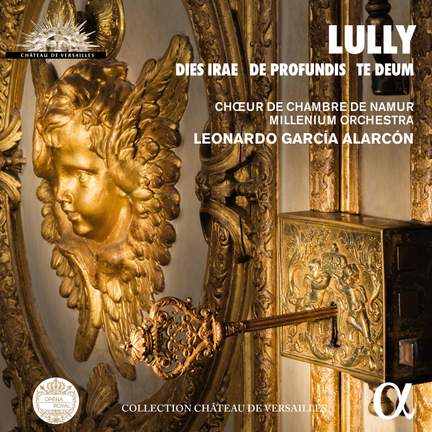
Lully: Dies Irae, De Profondis & Te Deum
Matthias Vidal, Thibaut Lenaerts, Alain Buet, Judith van Wanroij (soprano), Sophie Junker (soprano), Millenium Orchestra, Cappella Mediterranea (early music ensemble), Philippe Favette, Cyril Auvity (tenor), Chœur de Chambre de Namur, Leonardo García Alarcón
These works demand a conductor with theatrical instincts, and Leonardo García Alarcón certainly supplies that...his ability to shape expressive gestures within the music through added rests,...
Lully: Dies Irae, De Profondis & Te Deum
Matthias Vidal, Thibaut Lenaerts, Alain Buet, Judith van Wanroij (soprano), Sophie Junker (soprano), Millenium Orchestra, Cappella Mediterranea (early music ensemble), Philippe Favette, Cyril Auvity (tenor), Chœur de Chambre de Namur, Leonardo García Alarcón
Purchase product
These works demand a conductor with theatrical instincts, and Leonardo García Alarcón certainly supplies that...his ability to shape expressive gestures within the music through added rests,...
About
‘Although Lully never held any post in the Chapelle du Roi, his influence on the development of the grand motet, so emblematic of the Grand Siècle, was of decisive importance. He wrote imposing motets celebrating the glory of God and the King for the great ceremonies at court. Of the many royal funerals, that of Queen Marie-Thérèse in 1683 was among the most grandiose. Lully’s Dies iræ and De profundis were sung there. But his most celebrated motet was undoubtedly his Te Deum, which rang out for the first time in 1677 and became the king’s favourite. In 1687 Lully directed itonce again, but struck his foot violently with the heavy walking stick he used to beat time. The wound became infected and the gangrene gradually spread, causing the surintendant’s death on 22
March. Such was the tragic destiny of the man who was capable of conveying the most brilliant glory but also all the anguish of death in the same vein of grandeur.’*... That theatrical grandeur is the characteristic of this version recorded in the Chapelle Royale of the Château de Versailles. Lully is in the limelight again in 2019, on the occasion of the 350th anniversary of the Académie Royale de Musique (Paris Opéra), of which he was director from 1672 until his death. (*from an article by T. Leconte, CMBV)
Contents and tracklist
- Matthias Vidal, Thibaut Lenaerts, Alain Buet, Judith van Wanroij, Sophie Junker, Millenium Orchestra, Cappella Mediterranea, Leonardo García Alarcón, Chœur de Chambre de Namur
- Matthias Vidal, Thibaut Lenaerts, Alain Buet, Philippe Favette, Judith van Wanroij, Sophie Junker, Millenium Orchestra, Cappella Mediterranea, Leonardo García Alarcón, Chœur de Chambre de Namur
- Matthias Vidal, Cyril Auvity, Alain Buet, Judith van Wanroij, Sophie Junker, Millenium Orchestra, Cappella Mediterranea, Leonardo García Alarcón, Chœur de Chambre de Namur
Awards and reviews
 January/February 2020
These works demand a conductor with theatrical instincts, and Leonardo García Alarcón certainly supplies that...his ability to shape expressive gestures within the music through added rests, dynamics, ornamentation, and articulation marks is both shrewdly judged and sensitive to the needs of the music itself—as in the repeatedly halting performance of the Dies irae’s “Pie Jesu.” This is, in short, a success from start to finish. Warmly recommended.