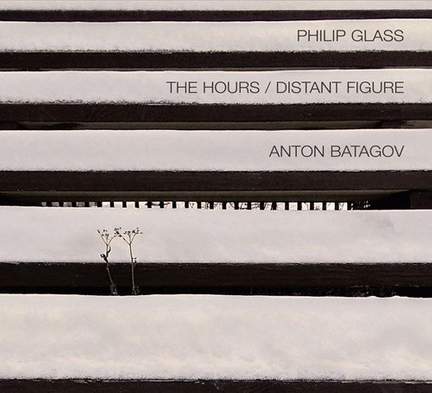
Special offer. Glass: The Hours & Distant Figure
Anton Batagov (piano)
In the hands of performers less attuned to the needs of Glass’s film score, the swaying three-against-two (or six-against-four) motion between the two hands in ‘The Poet acts’ from The Hours...
Special offer. Glass: The Hours & Distant Figure
Anton Batagov (piano)
Purchase product
In the hands of performers less attuned to the needs of Glass’s film score, the swaying three-against-two (or six-against-four) motion between the two hands in ‘The Poet acts’ from The Hours...
About
Russian pianist Anton Batagov builds on his two previous release of piano works by Philip Glass with his newest release The Hours/Distant Figure. Glass’s 2002 Academy Award nominated score to the Richard Eyre film The Hours, starring Meryl Streep, Nicole Kidman, and Julianne Moore. The score remains a high-water mark in Glass’s commercial film output.
The score to The Hours is composed for piano, string orchestra, and signified a new period in Glass’s music which represented an overt turn towards Romanticism. The solo piano version was embraced by pianists everywhere as some of Glass’s most approachable and intimate music. Anton Batagov has worked extensively with Glass’s label Orange Mountain Music including his own arrangements of the composer’s music from Glass’s early period including tracks from Koyaanisqatsi and Einstein on the Beach. This was followed with an impressive survey of the entirety of Glass Complete Piano Etudes Live in Moscow.
This new release presents the score to The Hours and also the first available recording of Glass’s newest work for piano Distant Figure (Passacaglia for Solo Piano) which Batagov premiered in Denmark in 2017 in the presence of the composer. Distant Figure marks Glass’s first work for solo piano in five years and is a melancholy tour de force.
Contents and tracklist
- Passacaglia for piano
- Anton Batagov (piano)
Awards and reviews
 February 2019
In the hands of performers less attuned to the needs of Glass’s film score, the swaying three-against-two (or six-against-four) motion between the two hands in ‘The Poet acts’ from The Hours often becomes clunky and mannered. However, Batagov’s subtle rhythmic inflections serve to mirror the music’s inner drama and tension.