Stenhammar: Symphony No. 2
Antwerp Symphony Orchestra, Christian Lindberg
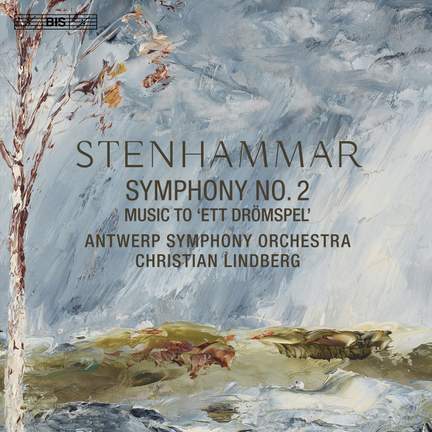
Awards:
-
Gramophone Magazine, Awards Issue 2018, Editor's Choice

Pure post-Romantic Scandi loveliness – great tunes, lush orchestrations and a fun fugue. What more could you want of a dull January day? The Antwerps are on form.
Stenhammar: Symphony No. 2
Antwerp Symphony Orchestra, Christian Lindberg
Purchase product
Awards:
-
Gramophone Magazine, Awards Issue 2018, Editor's Choice
Pure post-Romantic Scandi loveliness – great tunes, lush orchestrations and a fun fugue. What more could you want of a dull January day? The Antwerps are on form.
About
Considered to be one of the great Nordic symphonies of its time, Wilhelm Stenhammar's Symphony No. 2 in G minor was a long time in the making. Stenhammar the conductor and pianist was a leading figure in the musical life of Sweden and Scandinavia, but in his role as composer he struggled with self-doubt, feeling that his knowledge of musical theory was insufficient. In 1910 he decided to address this perceived shortcoming, and began an intensive study of counterpoint which included setting himself several thousand assignments over the following decade. At the same time, between 1911 and 1915, Stenhammar composed his G minor symphony, and against this background it is hardly surprising that it displays his preoccupation with counterpoint, its final movement a grandiose double fugue.
If the symphony is one of Stenhammar’s most celebrated works, his music for Strindberg’s A Dream Play is one of the least-known. It was composed for a production of Strindberg’s existential drama in 1916, a year after the completion of the Symphony. Rarely performed after that, the music was arranged into a concert version in 1970 by Hilding Rosenberg. Christian Lindberg and the Antwerp Symphony Orchestra have previously recorded Stenhammar’s Serenade to critical acclaim: the disc was named Disc of the Week on Danish Radio, received a recommendation on German website Klassik-Heute and was selected Recording of the Month on MusicWeb-International.
Contents and tracklist
- Antwerp Symphony Orchestra
- Christian Lindberg
- Recorded: April 2017
- Recording Venue: Koningin Elisabethzaal, Antwerp, Belgium
Spotlight on this release
-
Christian Lindberg on Stenhammar
14th Aug 2018
The Swedish conductor talks to David about his new recording of Stenhammar's mighty Second Symphony with the Antwerp Symphony Orchestra.

Awards and reviews
-
Gramophone MagazineAwards Issue 2018Editor's Choice
 January 2019
Pure post-Romantic Scandi loveliness – great tunes, lush orchestrations and a fun fugue. What more could you want of a dull January day? The Antwerps are on form.
 Awards Issue 2018
Lindberg’s version doesn’t burn quite so hot [as Stig Westerberg’s] but moves with the sense of urgency I believe Stenhammar had in mind. The Andante lilts, the Scherzo swings, and he wisely keeps the busy contrapuntal finale bustling along…A glorious release. Don’t miss it.
 October 2018
Immediately attractive is the scherzo and trio third movement, formal in shape, but quieter and more pensive than most symphonic scherzos. The trio is dominated by woodwinds and horns. To the ear, the movement is delightful and memorable, but the depths are moving. Perhaps the most extraordinary of the four remarkable movements is the finale, often swift and powerful in the vivace outer parts. Formally, it is an energetic double fugue. Stenhammar’s genius shines through every bar, with inventive orchestral effects and shifts in mood.