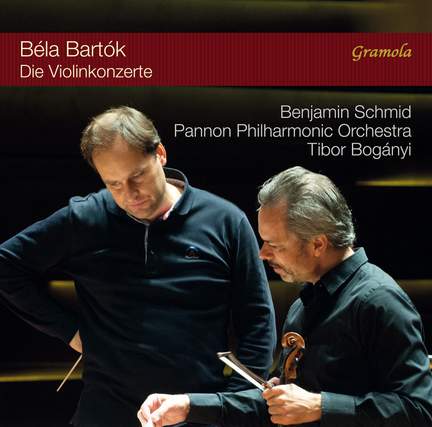
Bartók: Violin Concertos Nos. 1 & 2
Benjamin Schmid (violin)
Tibor Bogányi
Schmid plays with an intensity and sweetness that illuminates both the darkest textures and lyrical beauty of Bartók’s two concertos. Rich orchestral accompaniment, too.
Bartók: Violin Concertos Nos. 1 & 2
Benjamin Schmid (violin)
Tibor Bogányi
Purchase product
Schmid plays with an intensity and sweetness that illuminates both the darkest textures and lyrical beauty of Bartók’s two concertos. Rich orchestral accompaniment, too.
About
Austrian star violinist Benjamin Schmid has a great reputation for his extraordinary broad repertoire, which besides lesser known works for violin also includes the jazz genre. In cooperation with the Pannonic Philharmonic Orchestra under the baton of Tibor Boganyi, Schmid now releases a recording of both violin concertos by Bela Bartok. Written in 1908, the first concerto Op. posth. Sz 36 remained lost due to his unfortunate admiration of and the handing over of the manuscript to a violinist until late after Bartoks death, and only was published in 1956. The violin concerto No. 2 Sz 112 was composed in 1937/38 and should become the last completed solo concerto before Bartok's emigration to the United States. Here, the listener can from listening alone hardly tell that in addition to the typical 'Hungarian' melodies, twelve-tone motives and even quarter tones can be found in the solo part.
Contents and tracklist
- Benjamin Schmid (violin)
- Pannon Philharmonic Orchestra
- Tibor Bogányi
- Recorded: 9-10 January 2017
- Recording Venue: Kodály Centre, Pécs, Hungary
- Benjamin Schmid (violin)
- Pannon Philharmonic Orchestra
- Tibor Bogányi
- Recorded: 16-17 November 2016
- Recording Venue: Kodály Centre, Pécs, Hungary
Awards and reviews
 August 2018
Schmid plays with an intensity and sweetness that illuminates both the darkest textures and lyrical beauty of Bartók’s two concertos. Rich orchestral accompaniment, too.
 Awards Issue 2018
His accounts of both Bartók concertos are warmly sympathetic, alert to detail and appreciative of the music’s musical ground roots…Schmid’s seasoned approach suggests long familiarity with both scores but it’s the more sophisticated Second Concerto, music also suggestive of rustic undertones, that benefits most from his balance of heart and head, much aided, of course, by a fine technique.