Rameau: Naïs
Chantal Santon-Jeffery (Naïs), Reinoud Van Mechelen (Neptune), Florian Sempey – Jupiter, Tirésie), Thomas Dolié (Pluton, Télénus), Manuel Nuñez-Camelino (Astérion), Daniela Skorka (Flore, Une Bergère), Philippe-Nicolas Martin (Palémon), Márton Komáromi (Protée)
Purcell Choir, Orfeo Orchestra,...
Certainly Vashegyi and his Hungarian forces, always impressive in this repertoire, provide every incentive to relish the work…The delicate languor and sensitivity Vashegyi brings to slower number...
Rameau: Naïs
Chantal Santon-Jeffery (Naïs), Reinoud Van Mechelen (Neptune), Florian Sempey – Jupiter, Tirésie), Thomas Dolié (Pluton, Télénus), Manuel Nuñez-Camelino (Astérion), Daniela Skorka (Flore, Une Bergère), Philippe-Nicolas Martin (Palémon), Márton Komáromi (Protée)
Purcell Choir, Orfeo Orchestra,...
Purchase product
Certainly Vashegyi and his Hungarian forces, always impressive in this repertoire, provide every incentive to relish the work…The delicate languor and sensitivity Vashegyi brings to slower number...
About
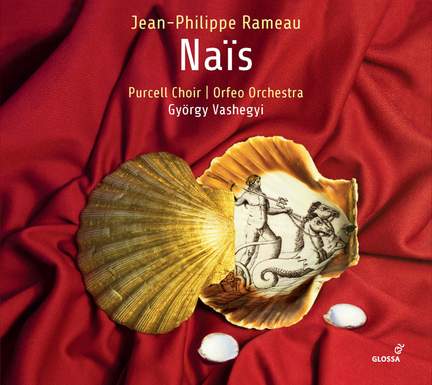
György Vashegyi’s love affair with French Baroque repertoire continues with Rameau’s Naïs from 1749 in a Glossa release complete with a characteristically appealing design.
Subtitled “Opéra pour la paix” (its prologue, at least, commemorates the 1748 Treaty of Aix-la-Chapelle), Naïs features demanding and extended leading roles for soprano Chantal Santon-Jeffery (Naïs) and high tenor Reinoud Van Mechelen (Neptune), ably assisted by Florian Sempey and Thomas Dolié, in an everyday eighteenth-century tale of a lovesick god in disguise, a misinterpreted prophecy and an alternative version of the Olympic Games (the score demands much from the chorus and Vashegyi’s refined Purcell Choir is up to the mark). Turn to Pascal Denécheau’s booklet essay for more about the opera and its context.
Rameau was a master orchestrator, no more so than in this pastorale heroïque, stuffed full of ballets figurés, airs, minuets, rigaudons and tambourins, and with his Orfeo Orchestra – led by the peerless Simon Standage – Vashegyi harnesses the music’s graphic and dramatic energy, complete with giants toppling off mountains, tidal waves swamping jilted lovers, underwater palaces, bucolic scenes (which include that characteristic French Baroque instrument, the musette – here played by Patrick Blanc), and even a chaconne for wrestlers.
Artists
Chantal Santon-Jeffery (Naïs), Reinoud Van Mechelen (Neptune), Florian Sempey – Jupiter, Tirésie), Thomas Dolié (Pluton, Télénus), Manuel Nuñez-Camelino (Astérion), Daniela Skorka (Flore, Une Bergère), Philippe-Nicolas Martin (Palémon), Márton Komáromi (Protée)
Purcell Choir, Orfeo Orchestra, György Vashegyi
Contents and tracklist
- Márton Komáromi (bass), Philippe-Nicolas Martin (baritone), Chantal Santon-Jeffery (soprano), Manuel Nuñez Camelino (tenor), Florian Sempey (baritone), Thomas Dolié (baritone), Reinoud Van Mechelen (tenor), Daniela Skorka (soprano)
- Orfeo Orchestra, Purcell Choir
- György Vashegyi
- Recorded: 4-6 March 2017
- Recording Venue: Müpa Budapest, Béla Bartók National Concert Hall, Hungary
Awards and reviews
 September 2018
Certainly Vashegyi and his Hungarian forces, always impressive in this repertoire, provide every incentive to relish the work…The delicate languor and sensitivity Vashegyi brings to slower number never leave any doubt of his love and idiomatic empathy for the music…Van Mechelen turns in an exemplary performance, singing with an understated but nonetheless ardent, easy grace that never becomes forced…A recording that can be confidently recommended to all lovers of French baroque opera.