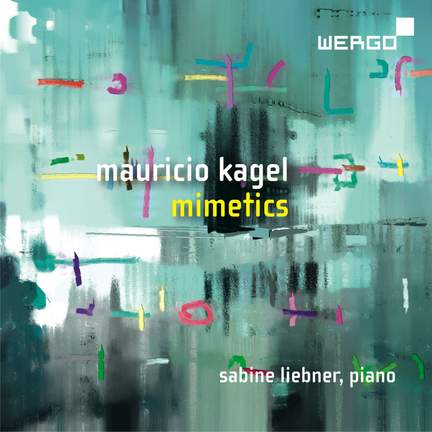
Kagel: Mimetics
Sabine Liebner (piano)
Kagel (1931-2008) was modernist and postmodernist master, his often anarchistic works aiming to subvert or deconstruct the structures of classical music. That’s true here, with Metapiece appearing...
Kagel: Mimetics
Sabine Liebner (piano)
Purchase product
Kagel (1931-2008) was modernist and postmodernist master, his often anarchistic works aiming to subvert or deconstruct the structures of classical music. That’s true here, with Metapiece appearing...
About
In 1961, Mauricio Kagel wrote a piano piece with two titles. As a solo work, it is called 'Metapiece'. It can also, however, be played together – either simultaneously or in alternation – with other pieces by Kagel or other living composers, and is then called Mimetics. In this way, Kagel opens at the conceptual level various possibilities for the interpreter to realize his composition. The pianist Sabine Liebner has accepted Kagel’s invitation to collaborate and undertaken her own musical journey through the composer’s piano music. Sabine Liebner‘s response to his invitation to play with the idea of open form is unique in that she combines 'Metapiece' exclusively with other piano pieces, all of them composed by Kagel himself. 'Metapiece', in its Mimetics form, surrounds these other works or is laid over them. Framed by Mimetics, the Cuatro piezas para piano and MM 51 are played in their original forms, and the piano etude An Tasten is subverted by a version of Mimetics. At the end of Liebner’s response to Kagel’s original invitation, 'Metapiece' itself appears in a 20-minute solo version.
Contents and tracklist
- Sabine Liebner
- Sabine Liebner
- Sabine Liebner
- Sabine Liebner
- Sabine Liebner
- Sabine Liebner
- Sabine Liebner
- Sabine Liebner
- Sabine Liebner
- Sabine Liebner
- Sabine Liebner
- Sabine Liebner
- Sabine Liebner
Awards and reviews
 March 2018
Kagel (1931-2008) was modernist and postmodernist master, his often anarchistic works aiming to subvert or deconstruct the structures of classical music. That’s true here, with Metapiece appearing first in juxtaposition with the early Five Pieces, written in Argentina in 1954. Unlike most classical recordings, this is a real album, with a genuine concept, and an excellent introduction to Kagel’s work.