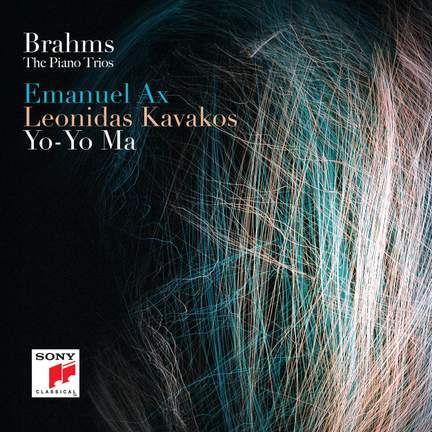
Brahms: Piano Trios Nos. 1-3
Leonidas Kavakos (violin), Yo-Yo Ma (cello), Emanuel Ax (piano)
Their performance of Brahms’s three Piano Trios are gratifyingly expansive and red-blooded. They appear to have undertaken this project not for business but for pleasure. This is perhaps most...
Brahms: Piano Trios Nos. 1-3
Leonidas Kavakos (violin), Yo-Yo Ma (cello), Emanuel Ax (piano)
Purchase product
Their performance of Brahms’s three Piano Trios are gratifyingly expansive and red-blooded. They appear to have undertaken this project not for business but for pleasure. This is perhaps most...
About
World-famous cellist Yo-Yo Ma and his long-time collaborator, pianist Emanuel Ax, are joined by violinist Leonidas Ka-vakos in their first recording together of all three of the piano trios of Johannes Brahms. Ma and Ax have built together a distinguished catalogue of Brahms recordings, but this is their first recording of the Piano Trios and their first collabo-ration with Kavakos. Of the three Brahms Piano Trios - Trio No. 1 in B Major, Op. 8; Trio No. 2 in C Major, Op. 87; and Trio No. 3 in C Minor, Op. 101 – the Second and Third Trios were written and first performed in quick succession (1882 and 1883), both exam-ples of Brahms at his creative zenith. The same can be said of the First Trio: originally completed when he was twenty, in 1854, and premiered the following year, Brahms thoroughly rethought and revised it in a new version premiered early in 1890. That more elegant and concentrated version of a youthful work has become the standard for the First Trio, and it is the version performed on the recording by Ma, Ax and Kavakos. All three performers have been acclaimed for their interpretations of Brahms, as soloists and as colleagues. Between them, Ma and Ax have shared four Grammy Awards® for their recordings of Brahms’s chamber music.
Contents and tracklist
Awards and reviews
 Christmas 2017
Their performance of Brahms’s three Piano Trios are gratifyingly expansive and red-blooded. They appear to have undertaken this project not for business but for pleasure. This is perhaps most evident in the inner movements…There’s impeccable musicality and considerable relish in these performances, but there are more searching accounts.
 21st September 2017
The quality of their playing is never in doubt, and the ensemble is faultless. There’s tremendous authority in the assertive movements...but there could be something more personal in the more wistfully introspective ones.