George Lloyd: Symphony Nos. 6 & 7
BBC Northern Symphony Orchestra, Edward Downes
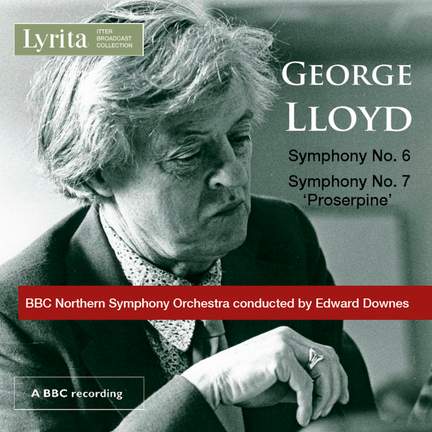
The present two symphonies make for a pointed contrast in all respects. The Sixth (1956) is the shortest of the cycle…the much larger Seventh could hardly be more different…The work gave rise...
George Lloyd: Symphony Nos. 6 & 7
BBC Northern Symphony Orchestra, Edward Downes
Purchase product
The present two symphonies make for a pointed contrast in all respects. The Sixth (1956) is the shortest of the cycle…the much larger Seventh could hardly be more different…The work gave rise...
About
‘I just write what I have to write’. The artistic credo of George Lloyd (1913-1998) conveys the directness and emotional honesty of his music. He wrote in a traditional idiom enriched by a close study of selected models, Verdi and Berlioz chief among them. His music is not derivative, however. It is distinctive and written with integrity. There is a remarkable consistency to his output, most of which was created spontaneously and without the incentive of a commission. He was fortunate enough to discover his individual and versatile musical voice at an early age. The deceptively artless quality of his scores stems from a rigorous grounding in composition techniques.
Lloyd had found a champion of his music in conductor Edward Downes (1924-2009). Downes conducted the first performance of Lloyd’s Eighth Symphony (1961, orchestrated 1965) with the BBC Northern Symphony Orchestra, broadcast on Radio 3 on 4 July 1977. Many listeners were stopped in their tracks by the work’s melodic strength and imaginative scoring. This turning point in the composer’s fortunes marked the beginning of the public’s demand for performances and recordings of his music. In the succeeding five years Downes tirelessly promoted and disseminated Lloyd’s works.
Contents and tracklist
- BBC Northern Symphony Orchestra
- Sir Edward Downes
- BBC Northern Symphony Orchestra
- Sir Edward Downes
Awards and reviews
 Awards Issue 2017
The present two symphonies make for a pointed contrast in all respects. The Sixth (1956) is the shortest of the cycle…the much larger Seventh could hardly be more different…The work gave rise to much soul-searching but ultimately earned praise from those otherwise unreceptive to this composer. Downes endows it with unstinting drama, and is no less inside its diverting predecessor.