Adventus Domini - Gregorian Chant
Schola Hungarica
Janka Szendrei
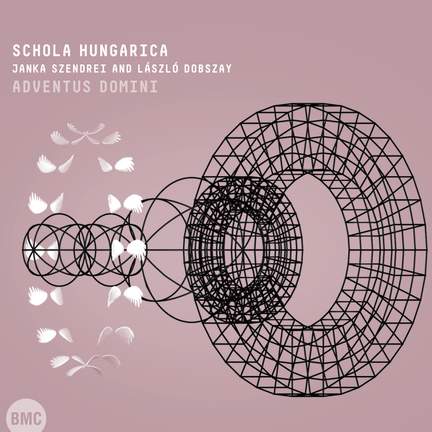
Adventus Domini - Gregorian Chant
Schola Hungarica
Janka Szendrei
Purchase product
About
The source for this recording is the Graz 807 codex, a gradual from the early twelfth century, which several scholars believe to have been compiled in Klosterneuburg in the monastery of the Augustinian canons. Due to its various peculiarities it has often been the subject of scholarly research in the fields of codicology, liturgical history, music history, and art history, and in 1981 a facsimile edition of the codex was published as volume 19 of Paléographie musicale. In line with the Hirsau reforms, the Klosterneuburg Graduale was notated using a stave (Klosterneuburg notation), and consists of compound neumes. Also interesting is the formation of the stave: the lines are etched, and at the beginning of each line is a clef (but no custos), colouring is in red and yellow. Thanks to the staff notation in this codex we can recognize the second dialect of Gregorian chant (German or pentatonic), the musical peculiarities of which appear both in the melodies and structure, and also in the minor details. To this day no reliable recording has been made of the material in the codex, in spite of its outstanding importance, and the present Schola Hungarica recording aims to fill this gap. The disc features the proper chants for the masses for Advent, which precedes the Christmas feasts. Between the chants can be heard ornamented forms of the versicles of the Offertorium, and also other rare chants (Benedictus es). The choice of chants also provides information regarding the liturgy. We can hear almost the entire proper mass for Advent, in the original order, in places supplemented with details from the readings, and including a selection of material from the masses for Ember Days. In order to provide more variety for the listener, the groups of chant for Sundays have been interspersed with four-part arrangements of the communio from Heinrich Isaac's large collection Choralis Constantinus, in which the Gregorian chant features as a cantus firmus.
Contents and tracklist
- Schola Hungarica
- László Dobszay, Janka Szendrei
- Schola Hungarica
- László Dobszay, Janka Szendrei
- Schola Hungarica
- László Dobszay, Janka Szendrei
- Schola Hungarica
- Janka Szendrei, László Dobszay
- Schola Hungarica
- László Dobszay
- Schola Hungarica
- László Dobszay, Janka Szendrei