Special offer. Arias for Nicolino
Carlo Vistoli (countertenor)
I Talenti Vulcanici, Stefano Demicheli
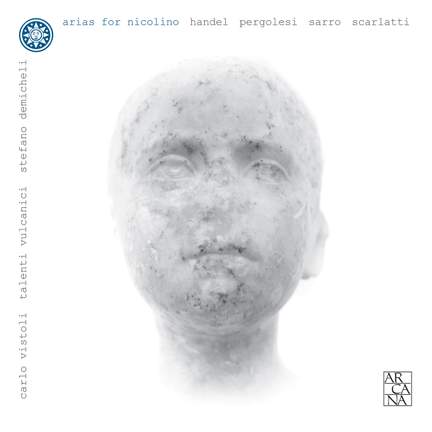
Vistoli’s supple facility for rapid passagework is to the fore in ‘ Torno ai ceppi’ from Sarro’s Arsace…Aside from some momentary imperfections in the strings’ intonation, the youthful ‘volcanic...
Special offer. Arias for Nicolino
Carlo Vistoli (countertenor)
I Talenti Vulcanici, Stefano Demicheli
Purchase product
Vistoli’s supple facility for rapid passagework is to the fore in ‘ Torno ai ceppi’ from Sarro’s Arsace…Aside from some momentary imperfections in the strings’ intonation, the youthful ‘volcanic...
About
The creator of the title roles of Handel’s Rinaldo and Amadigi, Nicolò Grimaldi (Naples, 1673 – Naples, 1732), known as Nicolini, was the leading castrato of his time, an outstanding artist praised as a fine actor as well as a singer. A generation older than Carlo Broschi (Farinelli), Gaetano Majorano (Caffarelli) and Giovanni Carestini, he possessed exceptional vocal agility and virtuosity, contributing significantly to the establishment of the legend of the castratos’ virtuosity. The young Italian countertenor and rising star of Baroque opera Carlo Vistoli offers us a perfect picture of him in this anthology retracing the key moments of his career, including extracts from Handel’s operas but also, among others, from Giovanni Battista Pergolesi’s first opera, Salustia, which Nicolino would have sung at Naples had he not fallen ill and died during the rehearsals.
He is accompanied by Talenti Vulcanici (the newly formed resident ensemble of the Centro di Musica Antica - Fondazione Pietà de’ Turchini di Napoli), here galvanised by its harpsichordist and principal conductor Stefano Demicheli, a familiar name on the Fuga Libera label, on which he released three successful recordings with his own ensemble Dolce & Tempesta. This album marks the beginning of a new series dedicated to Neapolitan music, in collaboration with the Neapolitan Foundation.
Contents and tracklist
- Stefano Demicheli, Talenti Vulcanici, Carlo Vistoli
- Recorded: 30 November / 04 December 2015
- Strefano Demicheli, Talenti Vulcanici
- Recorded: 30 November / 04 December 2015
- Stefano Demicheli, Talenti Vulcanici, Carlo Vistoli
- Recorded: 30 November / 04 December 2015
- Stefano Demicheli, Talenti Vulcanici
- Recorded: 30 November / 04 December 2015
- Stefano Demicheli, Talenti Vulcanici, Carlo Vistoli
- Recorded: 30 November / 04 December 2015
- Stefano Demicheli, Talenti Vulcanici, Carlo Vistoli
- Recorded: 30 November / 04 December 2015
- Stefano Demicheli, Talenti Vulcanici
- Recorded: 30 November / 04 December 2015
- Stefano Demicheli, Talenti Vulcanici, Carlo Vistoli
- Recorded: 30 November / 04 December 2015
- Stefano Demicheli, Talenti Vulcanici, Carlo Vistoli
- Recorded: 30 November / 04 December 2015
- Stefano Demicheli, Talenti Vulcanici, Carlo Vistoli
- Recorded: 30 November / 04 December 2015
- Stefano Demicheli, Talenti Vulcanici, Carlo Vistoli
- Recorded: 30 November / 04 December 2015
- Stefano Demicheli, Talenti Vulcanici, Carlo Vistoli
- Recorded: 30 November / 04 December 2015
- Stefano Demicheli, Talenti Vulcanici, Carlo Vistoli
- Recorded: 30 November / 04 December 2015
Awards and reviews
 August 2017
Vistoli’s supple facility for rapid passagework is to the fore in ‘ Torno ai ceppi’ from Sarro’s Arsace…Aside from some momentary imperfections in the strings’ intonation, the youthful ‘volcanic talents’ play with theatrical tautness and élan, and are directed by harpsichordist Stefano Demicheli with a reliable sense of pacing, detail and texture.
 July 2017
His is a voice that, apart from being intrinsically beautiful, strong and powerful, has been technically well trained, allowing him to sing not only passaggi with unusually clean precision, but also to ornament effectively. He is, too, a rare countertenorcapable of producing strong chest notes, as the downward leap in the second of the Marziano arias demonstrates impressively.