Mahler: Symphony No. 9
Symphonieorchester des Bayerischen Rundfunks, Mariss Jansons
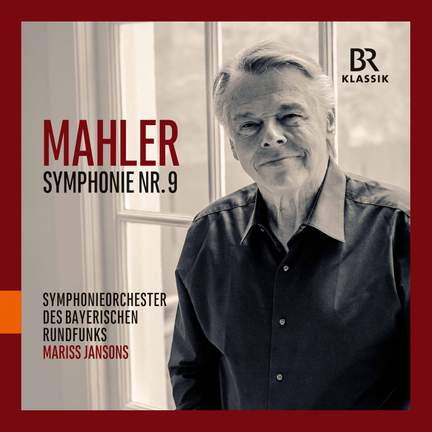
What is special is the care [Jansons] the Bavarian Radio Symphony Orchestra and the engineers have taken with the quieter music: those haunting, shadowy transitions in the Andante; those remote,...
Mahler: Symphony No. 9
Symphonieorchester des Bayerischen Rundfunks, Mariss Jansons
Purchase product
What is special is the care [Jansons] the Bavarian Radio Symphony Orchestra and the engineers have taken with the quieter music: those haunting, shadowy transitions in the Andante; those remote,...
About
Gustav Mahler's Ninth Symphony is primarily regarded as the composer’s reaction in the summer of 1908 to the diagnosis of a heart ailment, which he received just before writing the first sketches for the work. Mahler was deeply distraught and cannot have known how few years he still had left to live. His processing and exploration of his life experiences, and of valedictions, the meaning of life, death, salvation, life after death and love, always took place in and through his music. The Ninth Symphony was composed between 1909 and 1910 in Toblach, in a kind of creative frenzy, and was first performed in Vienna on June 26, 1912 by the Vienna Philharmonic, under the baton of Bruno Walter. Mahler had already died on May 18, 1911, and was no longer able to experience the premiere of his last completed work. Willem Mengelberg, the first ardent conductor of the composer’s works, wrote in his score: "Mahler's soul sings its farewell!" Mahler's Ninth Symphony represents the culmination of a development process. The progressive chromaticism and maximum utilization of the tonal are here taken to their limits - and, for the first time, beyond them. Indeed, the two movements that frame the work, in particular, depart from the tonal entirely, pointing clearly to the dawn of a new musical epoch. Alban Berg even called this symphony "the first work of New Music". The Munich concert event of October 2016 is now being released on CD by BR-KLASSIK – it is an outstanding interpretation of one of the most important compositions of the international symphonic repertoire of the early 20th century.
Contents and tracklist
Awards and reviews
 June 2017
What is special is the care [Jansons] the Bavarian Radio Symphony Orchestra and the engineers have taken with the quieter music: those haunting, shadowy transitions in the Andante; those remote, blanched contrapuntal episodes in the finale. And the final fade-out must surely be among the most fine-spun on record
 May 2017
I can’t think of a Ninth with less neurasthenic edge and a more inviting legato character. The playing [is] of predictable finesse…its restrained expressivity and cultured sound provide easeful balm for difficult times
 March 2017
Mariss Jansons here directs a memorable live account of Mahler 9, drawing stunning playing of considerable intensity from his Bavarian orchestra. Immaculately prepared, as usual, I admire Jansons’ masterly control of tempo, dynamic and scale. Beautifully recorded too at the Philharmonie, Munich
FonoForum April 2017
Mahler’s Ninth is wonderfully rich in nuance in this recording. The playing of the BR-Orchester under Mariss Jansons is filled with emotion, and yet never threatens to let sentimentality gain the upper hand. This has a great deal to do with the thoroughly musical care taken by Jansons, who is never swept away by the symphony’s programme.
Daily Telegraph 25th March 2017
As ever, Mariss Jansons produces an exquisitely moulded performance, with every transition beautifully managed, and every dynamic scrupulously observed. The orchestra plays with refinement.
Classical Ear 23rd March 2017
Mariss Jansons’s Munich Mahler scores highest for warmth, intelligence and emotional centredness.