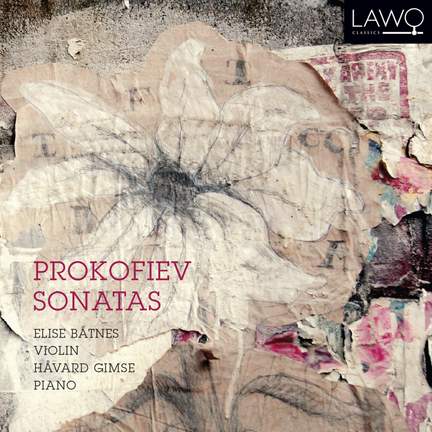
Special offer. Prokofiev: Sonatas
Elise Batnes (violin) & Havard Gimse (piano)
The forthright approach of Batnes and Gimse has a valid point to make as well – not that they are in any way wanting when it comes to the allure of lyrical restraint, either in the sonatas or...
Special offer. Prokofiev: Sonatas
Elise Batnes (violin) & Havard Gimse (piano)
Purchase product
The forthright approach of Batnes and Gimse has a valid point to make as well – not that they are in any way wanting when it comes to the allure of lyrical restraint, either in the sonatas or...
About
There is a pragmatism in Sergei Prokofiev’s music. It may have been needed to survive as an artist in the society that shaped him as a musician — in any case, it enabled him to manoeuvre between many musical formats. When he was admitted to the conservatory in St. Petersburg in his early teenage years, Prokofiev had some shorter piano works to his credit and alternated between writing isolated character pieces, vocal music and classical forms. Later, he would broaden his repertoire to include opera, ballet and symphonies
Perhaps it was more a matter of musical temperament than politics. Prokofiev graduated from the conservatory both as composer and concert pianist, and when hearing him play his own piano music, it is clear that he is in pursuit of a sound in the instrument that is just as even and equal as the free tonality he is exploring. A similar equality of roles of the instruments developed in his work over time and distinguishes both the first and second violin sonata. There is at the same time in this all-encompassing harmonisation a perpetual undercurrent of restlessness that finds expression especially in the many and sudden turns in the harmonies.
Contents and tracklist
Awards and reviews
 May 2017
The forthright approach of Batnes and Gimse has a valid point to make as well – not that they are in any way wanting when it comes to the allure of lyrical restraint, either in the sonatas or in the Five Melodies