Special offer. Rossini: Otello
Gregory Kunde (Otello), Maarten Heirman (The Doge of Venice), Robert McPherson (Iago), Maxim Mironov (Rodrigo), Josef Wagner (Elmiro Barberigo), Raffaella Lupinacci (Emilia), Carmen Romeu (Desdemona), Stephan Adriaens (A gondolier)
Symfonisch Orkest Opera Vlaanderen, Koor van de Vlaamse Opera,...
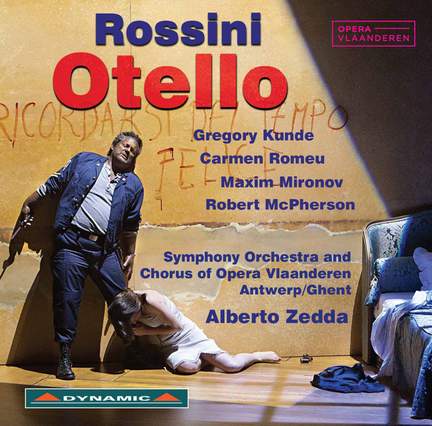
Most impressive of the principals is Gregory Kunde, whose keen enunciation and fluent, heroic tone—still firm, and both grand and thrilling when required— is just what is needed in the title...
Special offer. Rossini: Otello
Gregory Kunde (Otello), Maarten Heirman (The Doge of Venice), Robert McPherson (Iago), Maxim Mironov (Rodrigo), Josef Wagner (Elmiro Barberigo), Raffaella Lupinacci (Emilia), Carmen Romeu (Desdemona), Stephan Adriaens (A gondolier)
Symfonisch Orkest Opera Vlaanderen, Koor van de Vlaamse Opera,...
Purchase product
Most impressive of the principals is Gregory Kunde, whose keen enunciation and fluent, heroic tone—still firm, and both grand and thrilling when required— is just what is needed in the title...
About
The second post-war period saw the beginnings of the 'Rossini Renaissance', so called because of the rediscovery and staging of a great number of Rossini operas, particularly of the serious genre, which had long ceased to be performed. The Rossini Renaissance corrected the misconception that Rossini only excelled in comic opera, when in fact Rossini’s serious output was not only of very high quality in general, but also extremely original.
Otello is one of the finest of Rossini’s serious works, and indeed the composer himself thought highly of it. The opera marked one of the first encounters between a composer and Shakespeare’s theatre in the history of Italian opera.
In its original version, the opera had a tragic ending as envisioned by the English playwright, but Rossini later wrote a new finale in which Otello ends up believing in his wife’s fidelity and gives up his murderous intentions.
This production, recorded live in 2014 at Antwerp’s Vlaanderen Opera, is based on the critical edition by the Rossini Foundation and features the original tragic Shakespearean finale.
Recorded at: Opera Vlaanderen Antwerp/Ghent, Belgium
Recording date: February 2014
Duration: 158'32"
Notes: English, Italian
Artists
Gregory Kunde (Otello), Maarten Heirman (The Doge of Venice), Robert McPherson (Iago), Maxim Mironov (Rodrigo), Josef Wagner (Elmiro Barberigo), Raffaella Lupinacci (Emilia), Carmen Romeu (Desdemona), Stephan Adriaens (A gondolier)
Symfonisch Orkest Opera Vlaanderen, Koor van de Vlaamse Opera, Alberto Zedda
Contents and tracklist
- Gregory Kunde (tenor), Maarten Heirman (vocals), Robert McPherson (tenor), Maxim Mironov (tenor), Josef Wagner (bass), Raffaella Lupinacci (mezzo-soprano), Carmen Romeu (soprano)
- Symfonisch Orkest Opera Vlaanderen, Koor van de Vlaamse Opera
- Alberto Zedda
- Recorded: 14, 16 and 18 February 2014
- Recording Venue: Operahouse of Antwerp, Belgium
- Recorded: 14, 16 and 18 February 2014
- Recording Venue: Operahouse of Antwerp, Belgium
- Stephan Adriaens (tenor)
- Recorded: 14, 16 and 18 February 2014
- Recording Venue: Operahouse of Antwerp, Belgium
Awards and reviews
 March 2016
Most impressive of the principals is Gregory Kunde, whose keen enunciation and fluent, heroic tone—still firm, and both grand and thrilling when required— is just what is needed in the title role. More important than usual in Rossini’s version, the role of Rodrigo is delivered with accomplishment and a dulcet quality by Maxim Mironov.