Rabbia, furor, dispetto
Jeronimo Francisco de Lima: Sinfonie ed Arie
Monika Mauch (soprano)
Concentus Peninsulae, Vasco Negreiros
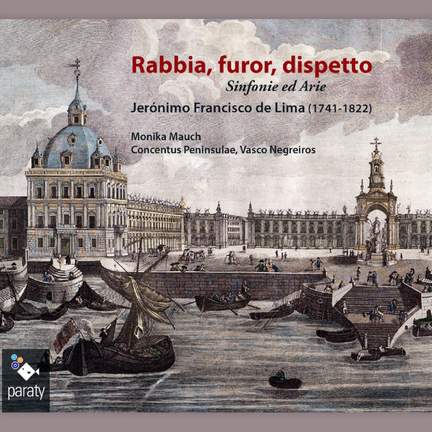
Ensemble Concentus Peninsulae play with suitably operatic brio – occasionally one might have wished for a couple more strings to balance the enthusiastic woodwind and brass, but Jeronimo Francisco’s...
Rabbia, furor, dispetto
Jeronimo Francisco de Lima: Sinfonie ed Arie
Monika Mauch (soprano)
Concentus Peninsulae, Vasco Negreiros
Purchase product
Ensemble Concentus Peninsulae play with suitably operatic brio – occasionally one might have wished for a couple more strings to balance the enthusiastic woodwind and brass, but Jeronimo Francisco’s...
About
This is the first recording of works by the Portuguese composer, Jeronimo Francisco de Lima [1741-1822]. The Royal Court Opera was an essential element in the reigns of D. José I (1750-1777) and D. Maria I (1777-1816), even after the disastrous earthquake of 1755 destroyed the magnificent opera house that stood on the banks of the Tagus river.
Obviously operatic composition was not merely a sideline for Lima, but rather an area to which he was seriously dedicated, and which he mastered. Moreover, his instrumental writing went far beyond a simple harmonic support to the melody of the singer but plays a prominent part in its own right, a characteristic which certainly stems from his Neapolitan training. The overtures of the four works featured on this CD are in no way inferior to the sung parts that follow. Medea, the witch in 'Teséo', has the most expressive music of all Lima's characters, here impressively sung by Monika Mauch.
Contents and tracklist
- Concentus Peninsulae, Monika Mauch, Vasco Negreiros
- Concentus Peninsulae, Monika Mauch, Vasco Negreiros
- Concentus Peninsulae, Monika Mauch, Vasco Negreiros
- Concentus Peninsulae, Monika Mauch, Vasco Negreiros
Awards and reviews
Early Music Review 31st January 2016
Ensemble Concentus Peninsulae play with suitably operatic brio – occasionally one might have wished for a couple more strings to balance the enthusiastic woodwind and brass, but Jeronimo Francisco’s vivid music comes across with full force.
 January 2016
Vasco Negreiros directs what appears to be the first-ever recording dedicated to Lima's music, which has clear traces of the Neapolitan school (eg Jommelli) and occasional hints of Haydnesque charisma. The striongs of Concentus Peninsulae can sound acerbic and these performances are sometimes rough and ready, but I enjoyed the bucolic oboes and bassoon contributions.