Vivaldi: Six Sonatas
Maria Krestinskaya (baroque violin), Anfisa Kalinia (baroque violin), Evgeny Sviridov (baroque violin)
Baltic Baroque (performed on period instruments), Grigori Maltizov
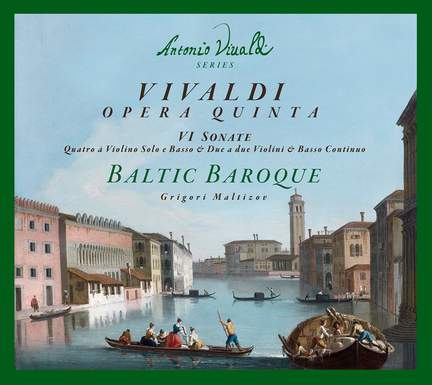
Baltic Baroque rise to the challenge with a sequence of energetic performances that are alive to the infectious foot-tapping appeal of Vivaldi's rhythms. The string tone is bright and the sense...
Vivaldi: Six Sonatas
Maria Krestinskaya (baroque violin), Anfisa Kalinia (baroque violin), Evgeny Sviridov (baroque violin)
Baltic Baroque (performed on period instruments), Grigori Maltizov
Purchase product
Baltic Baroque rise to the challenge with a sequence of energetic performances that are alive to the infectious foot-tapping appeal of Vivaldi's rhythms. The string tone is bright and the sense...
About
Vivaldi’s sonatas op.5 appeared in 1716 and have some special features: The opus is declared as the second part of his op.2 and contains four solo sonatas and two trio sonatas, which was rather unusual at that time. In order to present their works to the audience, the 18th century composers tried to supply the title pages of the scores with as precise and detailed description of the contents. The majority of the sonatas of op.5 are dances. This is actually the first recording on period instruments. This release is the fourth in the Vivaldi Series on Estonian record productions.
Contents and tracklist
- Maria Krestinskaya
- Baltic Baroque
- Grigori Maltizov
- Anfisa Kalinia
- Baltic Baroque
- Grigori Maltizov
- Maria Krestinskaya
- Baltic Baroque
- Grigori Maltizov
- Evgeny Sviridov
- Baltic Baroque
- Grigori Maltizov
- Maria Krestinskaya, Evgeny Sviridov
- Baltic Baroque
- Grigori Maltizov
- Maria Krestinskaya, Evgeny Sviridov
- Baltic Baroque
- Grigori Maltizov
Awards and reviews
 January 2015
Baltic Baroque rise to the challenge with a sequence of energetic performances that are alive to the infectious foot-tapping appeal of Vivaldi's rhythms. The string tone is bright and the sense of ensemble effortless...Baltic Baroque bring together the qualities of Teutonic precision and Italian verve in a thoroughly convincing and attractive way.