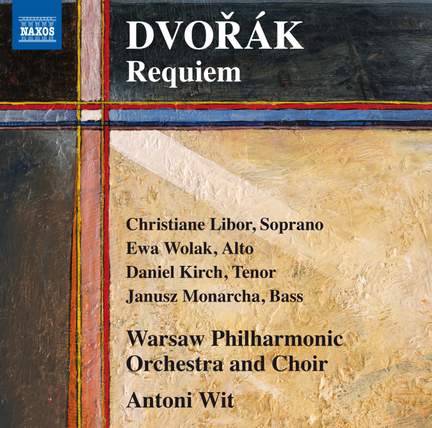
Dvořák: Requiem, Op. 89
Christiane Libor (soprano), Ewa Wolak (alto), Daniel Kirch (tenor) & Janusz Monarcha (bass)
Warsaw Philharmonic Orchestra and Choir, Antoni Wit
Awards:
-
Gramophone Magazine, January 2015, Editor's Choice

The Warsaw Philharmonic Choir are in fine collective voice...The quartet of soloists are magnificent...Orchestrally, this is a stunning performance. Perfectly blended woodwind are clearly focused...
Dvořák: Requiem, Op. 89
Christiane Libor (soprano), Ewa Wolak (alto), Daniel Kirch (tenor) & Janusz Monarcha (bass)
Warsaw Philharmonic Orchestra and Choir, Antoni Wit
Purchase product
Other available formats

Awards:
-
Gramophone Magazine, January 2015, Editor's Choice
The Warsaw Philharmonic Choir are in fine collective voice...The quartet of soloists are magnificent...Orchestrally, this is a stunning performance. Perfectly blended woodwind are clearly focused...
About
Antonín Dvořák’s huge popularity in England was built largely on the success of his Stabat Mater, which he had conducted there in 1884 and 1885. It was well suited to the country’s choral traditions and led eventually to a commission for a Requiem, which was premièred in Birmingham in 1891. Written in ten months during tours to Russia, England and Germany, its success was immediate. Sitting closer to the tradition of Cherubini than Verdi, its tone is compassionate and reflective, devoid of unnecessary drama, and movingly crafted with great sophistication.
Contents and tracklist
- Christiane Libor, Ewa Wolak, Daniel Kirch, Janusz Monarcha
- Chór Filharmonii Narodowej w Warszawie, Warsaw National Philharmonic Orchestra
- Antoni Wit
Awards and reviews
-
Gramophone MagazineJanuary 2015Editor's Choice
 January 2015
The Warsaw Philharmonic Choir are in fine collective voice...The quartet of soloists are magnificent...Orchestrally, this is a stunning performance. Perfectly blended woodwind are clearly focused on a wide-spread bed of strings. The recording is vividly engineered and everyone involved is on top form. A bargain.
 February 2015
The string playing is marvellous and the woodwind, so important in this work, are refined and ethereal. The choir also holds its own against the Czechs – you only need to listen to the Introitus to be convinced