Maxwell Davies: Strathclyde Concerto No. 2
Vittorio Ceccanti (cello), with Bruno Canino (piano)
Orchestra Sinfonica Nazionale della RAI, Peter Maxwell Davies
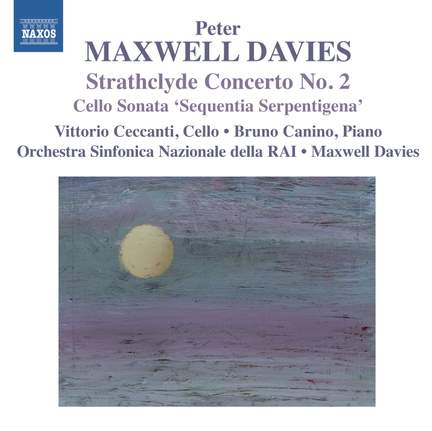
The Cello Concerto, premiered in 1989, works its way inwards to a deeply expressive central Lento, beautifully played here by Vittorio Ceccanti
Maxwell Davies: Strathclyde Concerto No. 2
Vittorio Ceccanti (cello), with Bruno Canino (piano)
Orchestra Sinfonica Nazionale della RAI, Peter Maxwell Davies
Purchase product
The Cello Concerto, premiered in 1989, works its way inwards to a deeply expressive central Lento, beautifully played here by Vittorio Ceccanti
About
This is the second disc of works focussing on Peter Maxwell Davies’ continuing artistic relationship with the Ceccanti family. The Second Strathclyde Concerto is notable for its eloquently expressive cello lines and the composer’s signature transparency of orchestration. The Sonata ‘Sequentia Serpentigena’, written for Vittorio, was inspired by early medieval stone carvings in Tuscany and uses Gregorian chant to bring the serpent’s symbolism of temptation and betrayal to life. The Little Tune for Vittorio is a song based on an original theme in a Scottish folk style. Vittorio and Mauro Ceccanti can be heard in Maxwell Davies’ Linguae Ignis and Vesalii Icones on Naxos 8572712.
Contents and tracklist
- Vittorio Ceccanti
- Italian Radio Symphony Orchestra
- Peter Maxwell Davies
- Vittorio Ceccanti, Bruno Canino
- Vittorio Ceccanti, Bruno Canino
- Vittorio Ceccanti
Awards and reviews
 November 2013
The Cello Concerto, premiered in 1989, works its way inwards to a deeply expressive central Lento, beautifully played here by Vittorio Ceccanti
 4th September 2013
The Second Concerto is especially memorable, modelled with typically Maxian harmonics in the grand tradition, and makes an ideal starting point for a journey through 'Strathclyde'...Italian cellist Vittorio Ceccanti gives a searing account on this live recording
 19th May 2013
[Ceccanti] is superbly attuned to the idiom, handling Davies’s plainsong-derived phrases and Scotch-snap rhythms with sumptuous lyrical ease.