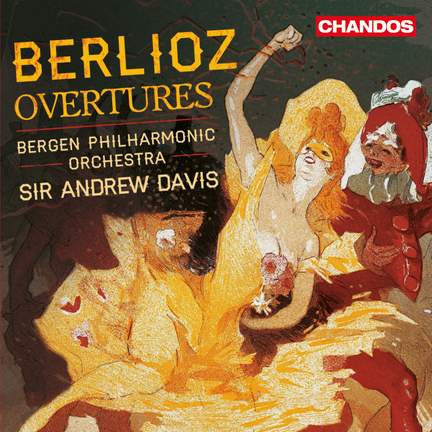
Berlioz: Overtures
Bergen Philharmonic Orchestra, Sir Andrew Davis
the playing here is satisfyingly mellow and vibrant, with warm strings and sturdy woodwind, yet also refreshing and translucent. This is aided by Andrew Davis's tempos fairly spacious and unforced...
Berlioz: Overtures
Bergen Philharmonic Orchestra, Sir Andrew Davis
Purchase product
the playing here is satisfyingly mellow and vibrant, with warm strings and sturdy woodwind, yet also refreshing and translucent. This is aided by Andrew Davis's tempos fairly spacious and unforced...
About
The Bergen Philharmonic Orchestra under Sir Andrew Davis here perform seven dazzling orchestral overtures by Hector Berlioz, a composer who excelled in blending literary and musical elements into highly energetic and personal creations.
The overtures are widely varied in mood, as are the operas from which they were drawn. Berlioz wrote his first large-scale instrumental composition, the Overture to Les Francs-juges, in 1826, the year in which he enrolled at the Paris Conservatoire. Even though the opera itself was never performed, Berlioz remained proudly affectionate of the overture, which was played all over Germany and Holland in its early days. His second opera, Benvenuto Cellini, followed in 1838; its music gave rise both to the opera’s overture and to the concert overture Le Carnaval romain which depicts its subject in brilliant colour through breathtakingly vibrant orchestration.
The comic opera Béatrice et Bénédict took its inspiration from Shakespeare’s Much Ado about Nothing. The overture draws on an intense solo scene for Béatrice and adds elements of the cheerful banter that make up the story of the title characters’ playful courtship.
When Berlioz visited the Hungarian capital Pest in 1846, it was suggested to him that one way of winning the hearts of the audiences there would be to make an arrangement of the beloved Rákóczy March, which up until that point had been known only as a piano piece. Berlioz agreed, and on the very night before he left for Pest, he put together his own orchestral version of the piece. It was a resounding success when performed at his first concert, to the extent that Berlioz promptly included it in the large work on which he was working at the time: La Damnation de Faust.
Le Roi Lear, Le Corsaire, and Waverley have one thing in common: all are independent concert pieces that have been given the title overture as in many respects they do resemble opera overtures – but none is in actual fact connected to an opera. The composer here took his inspiration from literary works. Le Roi Lear, for instance, is a remarkable tone portrait of Shakespeare’s deranged king, full of energy and anger, while Le Corsaire may be loosely based on Byron’s The Corsair. Berlioz based Waverley on a novel of the same name by Sir Walter Scott, and the score bears a quotation in English: ‘Dreams of love and Lady’s charms, give place to honour and to arms.’ The contrast expressed so well in this simple quotation is equally evident in the music itself. Here the ‘dreams of love’ unfold in a long cello melody, which is repeated with richer orchestrations, before leading into the vigorous musical depiction of ‘honour and arms’.
Contents and tracklist
- Sir Andrew Davis, Bergen Philharmonic Orchestra
- Recorded: 11-14 June 2012
- Recording Venue: Grieghallen, Bergen, Norway
- Sir Andrew Davis, Bergen Philharmonic Orchestra
- Recorded: 11-14 June 2012
- Recording Venue: Grieghallen, Bergen, Norway
- Sir Andrew Davis, Bergen Philharmonic Orchestra
- Recorded: 11-14 June 2012
- Recording Venue: Grieghallen, Bergen, Norway
- Sir Andrew Davis, Bergen Philharmonic Orchestra
- Recorded: 11-14 June 2012
- Recording Venue: Grieghallen, Bergen, Norway
- Sir Andrew Davis, Bergen Philharmonic Orchestra
- Recorded: 11-14 June 2012
- Recording Venue: Grieghallen, Bergen, Norway
- Sir Andrew Davis, Bergen Philharmonic Orchestra
- Recorded: 11-14 June 2012
- Recording Venue: Grieghallen, Bergen, Norway
- Sir Andrew Davis, Bergen Philharmonic Orchestra
- Recorded: 11-14 June 2012
- Recording Venue: Grieghallen, Bergen, Norway
Spotlight on this release
-
Hector Berlioz
29th Mar 2014
Katherine takes up the 'Presto Recommends' baton this week and selects some favourite recordings of works by Hector Berlioz.

Awards and reviews
 April 2013
the playing here is satisfyingly mellow and vibrant, with warm strings and sturdy woodwind, yet also refreshing and translucent. This is aided by Andrew Davis's tempos fairly spacious and unforced but never slack, and now and then sizzling...there's no shortage of swashbuckle in Le corsaire and Benvenuto Cellini
 May 2013
Until now the collection to have of these remarkable works was by the Staatskapelle Dresden under Colin Davis...these thrilling new performances by Sir Andrew Davis and the excellent Bergen Philharmonic tend to trump the earlier issue, not least for the superb SACD quality.
 March 2013
Sir Andrew’s account of Le Carnaval romain is excellent. The memorable cor anglais solo near the start is nicely paced...the Bergen reading catches the colourful brilliance of the carnival itself in a dashing display...Benvenuto Cellini is another conspicuous success...the lyrical music is very winningly done in Bergen while there’s all the sweep and brilliance you could wish for later on in the overture
 March 2014
warm, mellow string-tone and some superb woodwind solo work make this one stand out from the crowd.