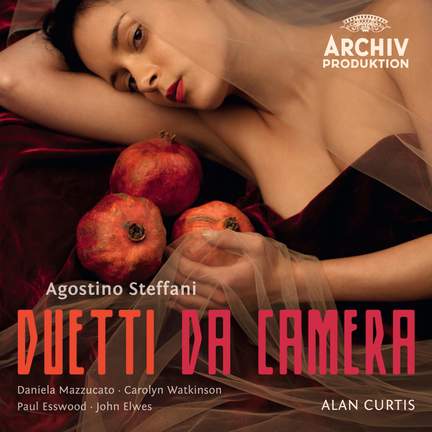
Agostino Steffani: Duetti da camera
Daniela Mazzucato (soprano), John Elwes (tenor), Carolyn Watkinson (contralto), Paul Esswood (countertenor)
Alan Curtis
Steffani was well noted for his duets which reveal great sensibility to the text as well as a rich formal diversity. Curtis's performances highlight these virtues as 'Gia tu parti' alluringly...
Agostino Steffani: Duetti da camera
Daniela Mazzucato (soprano), John Elwes (tenor), Carolyn Watkinson (contralto), Paul Esswood (countertenor)
Alan Curtis
Purchase product
Steffani was well noted for his duets which reveal great sensibility to the text as well as a rich formal diversity. Curtis's performances highlight these virtues as 'Gia tu parti' alluringly...
About
The name of Baroque composer Agostino Steffani (1654 – 1728) has been much in the air recently, and we have taken this opportunity to revive an Archiv Produktion classic from the early 1980s. It features four young Early Music soloists led by Alan Curtis, who in more recent years was behind a whole series of well-received recordings of Handel operas on the label.
In a variety of combinations the four soloists – two sopranos and two tenors - present eight charming chamber duets (duetti da camera) by Steffani to the accompaniment of harpsichord and cello. They range from amorous laments to amorous rejoicings, ending with a plea for liberty from love’s bonds.
With its new attractive cover, the CD booklet has a full introduction to Steffani and his works, the texts are presented in the original Italian with English translation.
Contents and tracklist
- Daniela Mazzucato (mezzo-soprano), John Elwes (tenor), Wouter Möller (cello), Alan Curtis (harpsichord), Alan Curtis (director), Carolyn Watkinson (mezzo-soprano), Paul Esswood (countertenor), Daniela Mazzucato (soprano)
- Recorded: 1981-09-08
- Recording Venue: Studio Lankwitz, Berlin
Awards and reviews
 April 2013
Steffani was well noted for his duets which reveal great sensibility to the text as well as a rich formal diversity. Curtis's performances highlight these virtues as 'Gia tu parti' alluringly reveals.