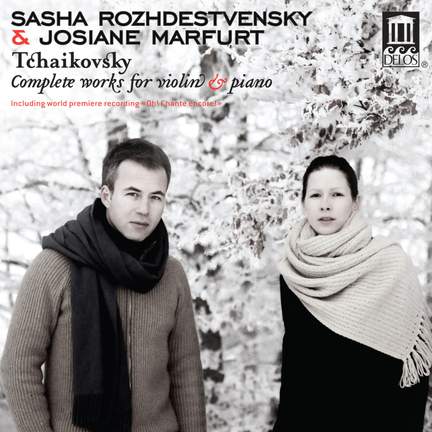
Special offer. Tchaikovsky: Complete Works for Violin & Piano
Sasha Rozhdestvensky (violin) & Josiane Marfurt (piano)
Sasha Rozhdestvensky and Josiane Marfurt give gentle and intelligent performances of both pieces (Rozhdestvensky very effectively drops the use of vibrato in favour of a grey, numbed tone at...
Special offer. Tchaikovsky: Complete Works for Violin & Piano
Sasha Rozhdestvensky (violin) & Josiane Marfurt (piano)
Purchase product
Sasha Rozhdestvensky and Josiane Marfurt give gentle and intelligent performances of both pieces (Rozhdestvensky very effectively drops the use of vibrato in favour of a grey, numbed tone at...
About
With this release, distinguished Russian violinist Sasha Rozhdestvensky and acclaimed Swiss pianist Josiane Marfurt offer the only available collection of P. I. Tchaikovsky’s music for violin and piano that can be considered truly “complete.”
The original score to the composer’s transcription of his early song for these instruments – Oh! Chante Encore, Op. 16, No. 4 – was long believed lost, until Rozhdestvensky discovered it recently at the National Library of France in Paris. This delightful and engaging work is offered here in its world premiere recording.
Rozhdestvensky’s playing is noted for its rare technical wizardry, gorgeous tone, and plenty of Russian “soul.” Emerging young pianist Marfurt is rapidly building a glowing reputation as both a top-tier soloist and chamber artist. As regular chamber partners, they form an ideal Tchaikovsky “team” – able to realize the composer’s distinctive melodic-harmonic beauty, lush sound and searing sentiment to perfection.
Contents and tracklist
- Sasha Rozhdestvensky, Josiane Marfurt
- Sasha Rozhdestvensky, Josiane Marfurt
- Sasha Rozhdestvensky, Josiane Marfurt
- Sasha Rozhdestvensky, Josiane Marfurt
- Sasha Rozhdestvensky, Josiane Marfurt
- Sasha Rozhdestvensky, Josiane Marfurt
Awards and reviews
 February 2012
Sasha Rozhdestvensky and Josiane Marfurt give gentle and intelligent performances of both pieces (Rozhdestvensky very effectively drops the use of vibrato in favour of a grey, numbed tone at the most moving moment of the Andante funebre)