Krenek: Symphony No. 4
Volker Worlitzsch (violin), Dimitar Penkov (viola) & Nikolai Schneider (violoncello)
NDR RADIOPHILHARMONIE, Alun Francis
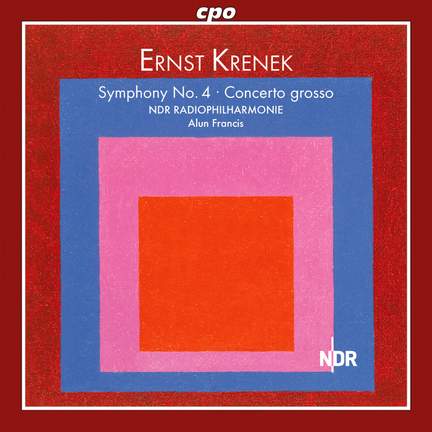
The Concerto Grosso No.2 (1924), nicely done by Alun Francis and his Hanover-based orchestra, is a mock-Baroque piece that glances at both Pulcinella and Bach's First Brandenburg Concerto, though...
Krenek: Symphony No. 4
Volker Worlitzsch (violin), Dimitar Penkov (viola) & Nikolai Schneider (violoncello)
NDR RADIOPHILHARMONIE, Alun Francis
Purchase product
The Concerto Grosso No.2 (1924), nicely done by Alun Francis and his Hanover-based orchestra, is a mock-Baroque piece that glances at both Pulcinella and Bach's First Brandenburg Concerto, though...
About
CPO have been releasing all of Ernst Krenek’s symphonies but the last instalment of the series was not for almost twenty years. The Fourth Symphony was regarded as lost until five years ago when the Krenek Institute found the score in America. CPO are now proud to present the completion of their series with the World Premiere Recording of Symphony No. 4 and the Concerto grosso, Op. 25, 2.
Symphony No. 4 is an extremely complex work comprising of atonal and tonal elements. In contrast, the Concerto grosso No. 2 is a work that originated during Krenek’s Neo-Baroque phase in the 1920s.
Contents and tracklist
- North German Radio Philharmonic Orchestra
- Alun Francis
- Volker Worlitzsch (violin), Dimitar Penkov (viola), Nikolai Schneider (cello)
- North German Radio Philharmonic Orchestra
- Alun Francis
Awards and reviews
 7th July 2011
The Concerto Grosso No.2 (1924), nicely done by Alun Francis and his Hanover-based orchestra, is a mock-Baroque piece that glances at both Pulcinella and Bach's First Brandenburg Concerto, though its acerbic dissonances and intimations of threat locate it firmly in the Austro-German world of the early 20th century.